Thumbnail do vídeo

Olá Bom dia CMTV

Luciana Abreu and Rúben Pacheco discuss biowaste—what it is and the importance of keeping a suitable container at home to separate it. Small actions make a big difference in proper sorting, enabling this waste to be diverted to new uses, such as energy generation. Since each municipality has different solutions for biowaste separation, we should seek information from them directly.

Thumbnail do vídeo

Bom dia CMTV

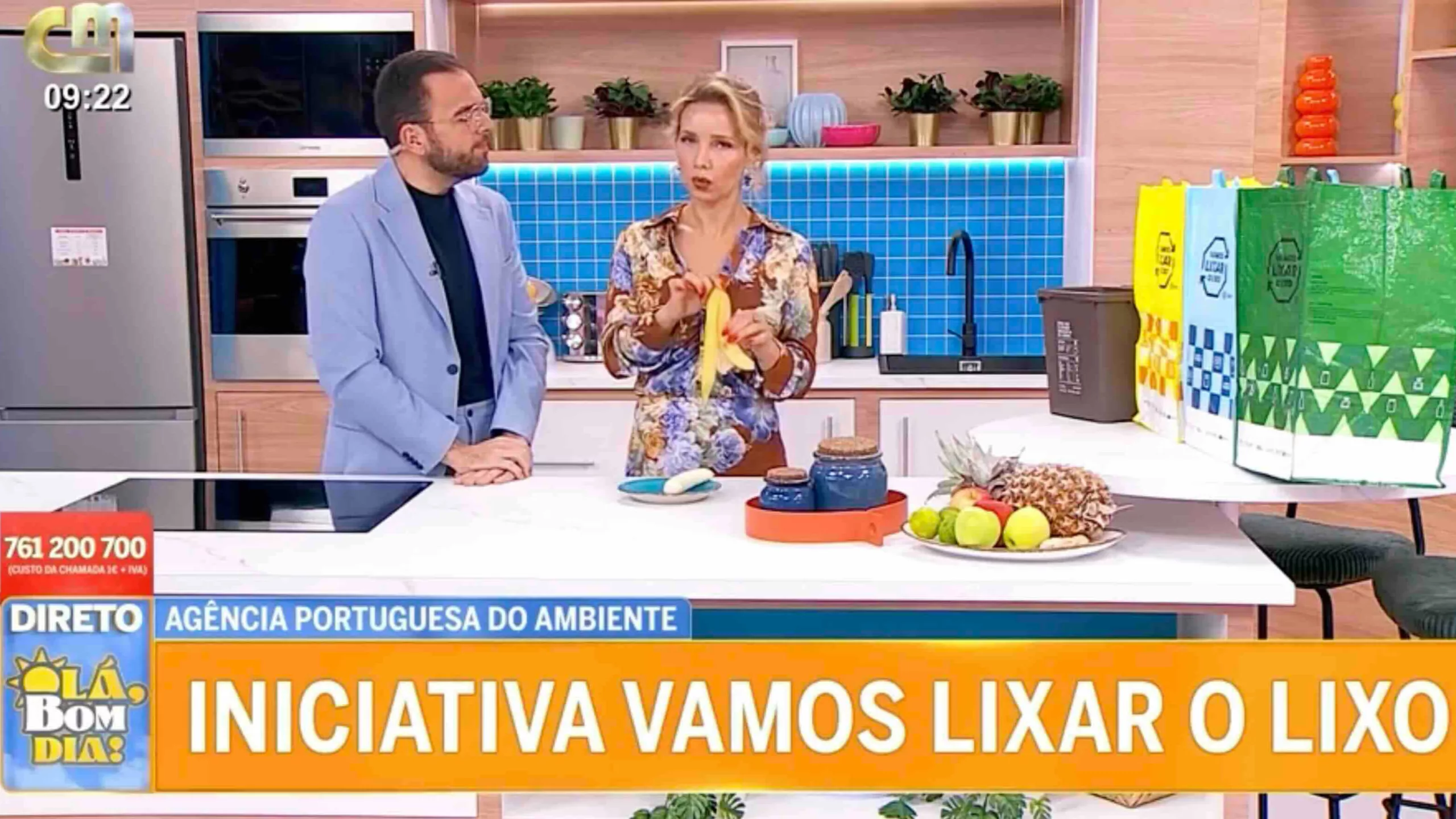
In this segment featured on CMTV’s “Bom Dia” program, hosts Rúben Pacheco and Luciana Abreu explained proper waste sorting while preparing a banana pancake recipe. Using the ingredients and their packaging as examples, they clarified which recycling bin was appropriate for each type of waste.

This initiative marks a new step in the Portuguese Environment Agency’s awareness campaign: “Let’s separate the waste before our future is wasted.”

Thumbnail do vídeo

NOW Report

The Portuguese Environment Agency has launched the campaign “Let’s separate the waste before our future is wasted,” aiming to promote the proper sorting of urban waste. It is estimated that around 3 million tons of improperly sorted waste end up in landfills, which have the capacity to last only another 3 to 5 years. Municipalities such as Matosinhos, Porto, and Póvoa de Varzim are investing in initiatives like selective waste collection, door-to-door pickup, and pilot projects based on a “pay-for-sorting” model.

The campaign is supported by the Environmental Fund and financed by Portugal 2030.

Thumbnail do vídeo

Notícias dos Famosos

The Portuguese Environmental Agency has launched a communication campaign to raise awareness about the need to separate waste. Until Sunday, you can learn more about recycling and biowaste, as well as win various giveaways. This segment featured an APA activation at Norte Shopping.

“Let’s separate the waste”: APA raises the alarm

The new phase of the Portuguese Environmental Agency’s campaign calls for waste separation and recycling, highlighting that more than 50% of the waste produced in Portugal still ends up in landfills.

“Let’s separate the waste” marks the starting point of the new phase of the Portuguese Environmental Agency (APA)’s campaign, which raises the alarm about a problem of monumental proportions: around three million tonnes of waste are deposited in landfills every year, accounting for more than half of all waste produced in Portugal.

Under the tagline “Let’s separate the waste before our future is wasted.”, the multimedia campaign is present on television, radio, billboards and digital platforms, with the aim of raising awareness among the Portuguese public about the urgent need to change behaviour and step up proper separation of household waste.

In the television campaign, a tour guide visits some of Lisbon’s most iconic monuments, including the Palácio Nacional da Ajuda and the Mosteiro dos Jerónimos, culminating in an unexpected “monument”: three million tonnes of municipal waste, symbolising the amount of rubbish that ends up in Portuguese landfills every year.

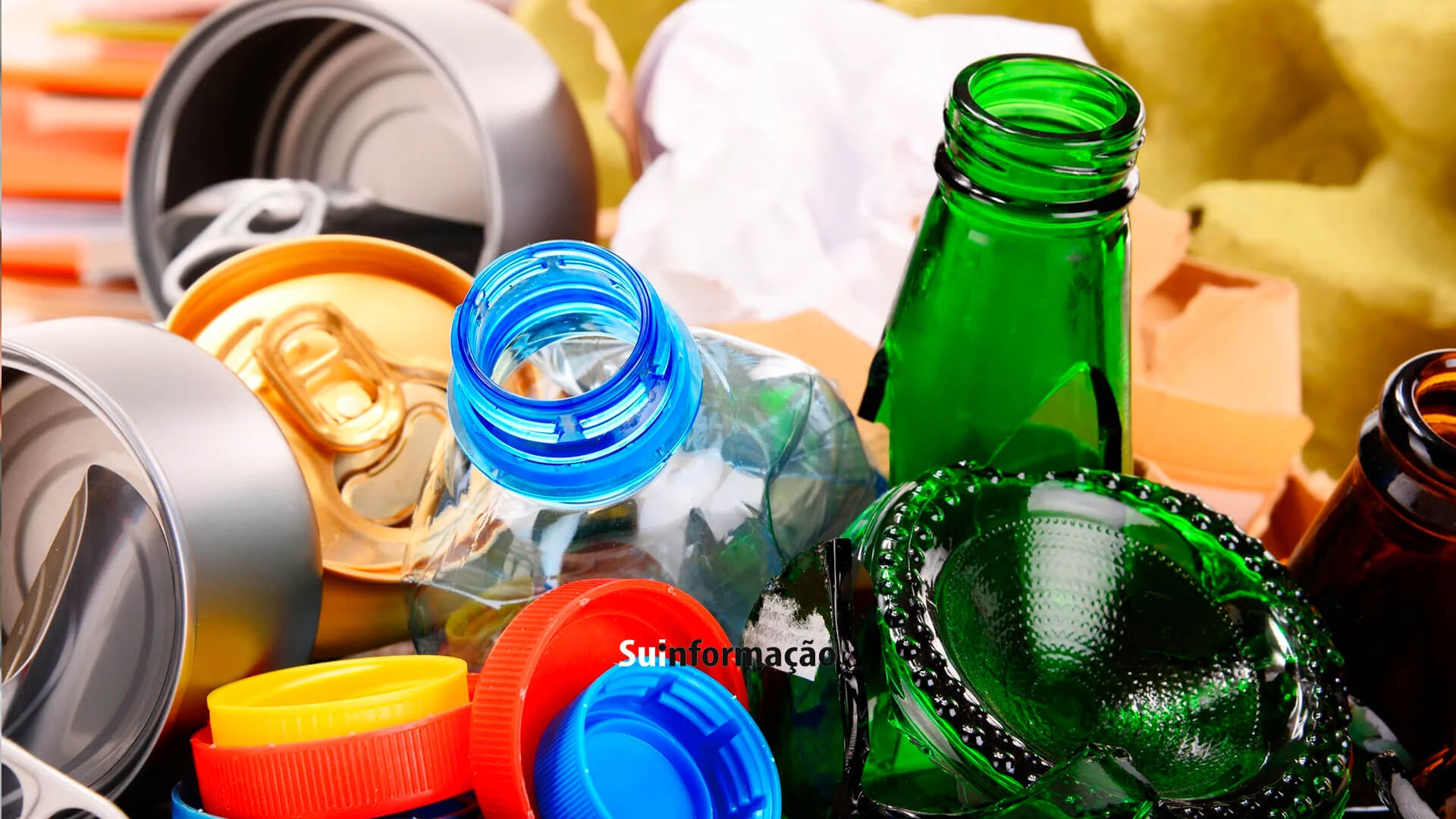
The image is intended to highlight the impact of inadequate waste separation on the exhaustion of national landfill capacity. In a press release, the APA emphasises that the solution is within everyone’s reach and involves the correct separation of glass, plastic and metal packaging, paper and cardboard, and bio-waste, allowing it to be sent for recycling and recovery. Currently, more than half of the waste produced in Portugal still goes to landfill — a situation the agency is determined to reverse.

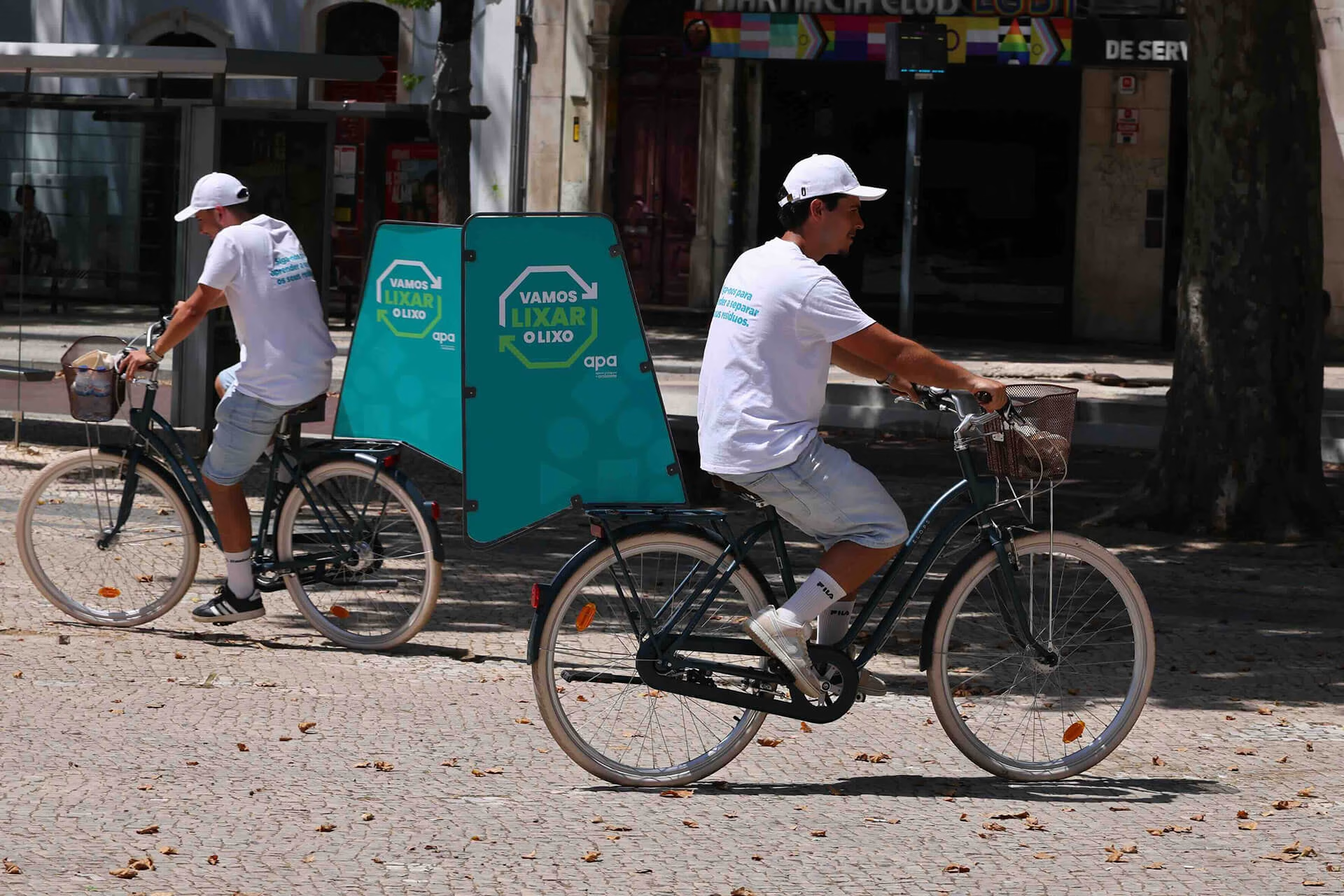
During the sales season, the campaign also gains a physical presence through activations at the Colombo Shopping Centre in Lisbon and at NorteShopping in Matosinhos. These initiatives aim to educate the public about what bio-waste is — food scraps and garden green waste — and reinforce the importance of recycling for a more sustainable future.

The APA stands feature an information space dedicated to bio-waste, a children’s area with educational games, and a recycling quiz zone. The activations take place at the Colombo Shopping Centre from 13 to 18 January and at NorteShopping from 27 January to 1 February.

The “Let’s separate the waste” campaign runs until the end of 2026.

Source

prevenção de resíduos

Waste Prevention

Waste prevention and management must be carried out in accordance with the principles of the waste hierarchy, which aims to transition towards a circular economy and achieve a high level of resource efficiency. It must follow this order:

a) Prevention;
b) Preparation for reuse;
c) Recycling;
d) Other types of recovery;
e) Disposal.

Around 5.5 million tonnes of waste are produced every year, and one of the main objectives of waste policy is to reduce this figure.

Prevention — the principle at the top of the waste hierarchy pyramid — involves implementing measures that enable a real reduction in the quantity of waste produced. Citizens, as waste producers, play a key role and can contribute to this goal through informed consumer choices and by adopting practices that facilitate the reuse of products or materials, thereby extending their useful life. Donating, purchasing reusable products, or choosing products that are not single-use whenever alternatives are available on the market are all actions that contribute to an effective reduction in waste production.

However, this is not solely a responsibility for citizens. Those who sell products must also adopt measures that extend the useful life of the products they sell (for example, by providing spare parts that allow products to be repaired). Prevention is not limited to materials and products — there is also a very significant dimension relating to the fight against food waste.

It should be noted that for waste whose production cannot be avoided, citizens should adopt behaviours that ensure it is sent to the correct bins, thereby guaranteeing that it is recycled or directed towards other forms of recovery.

For more information, visit the Portuguese Environmental Agency’s website at www.apambiente.pt