Thumbnail do vídeo

RTP1 – Bom Dia Portugal

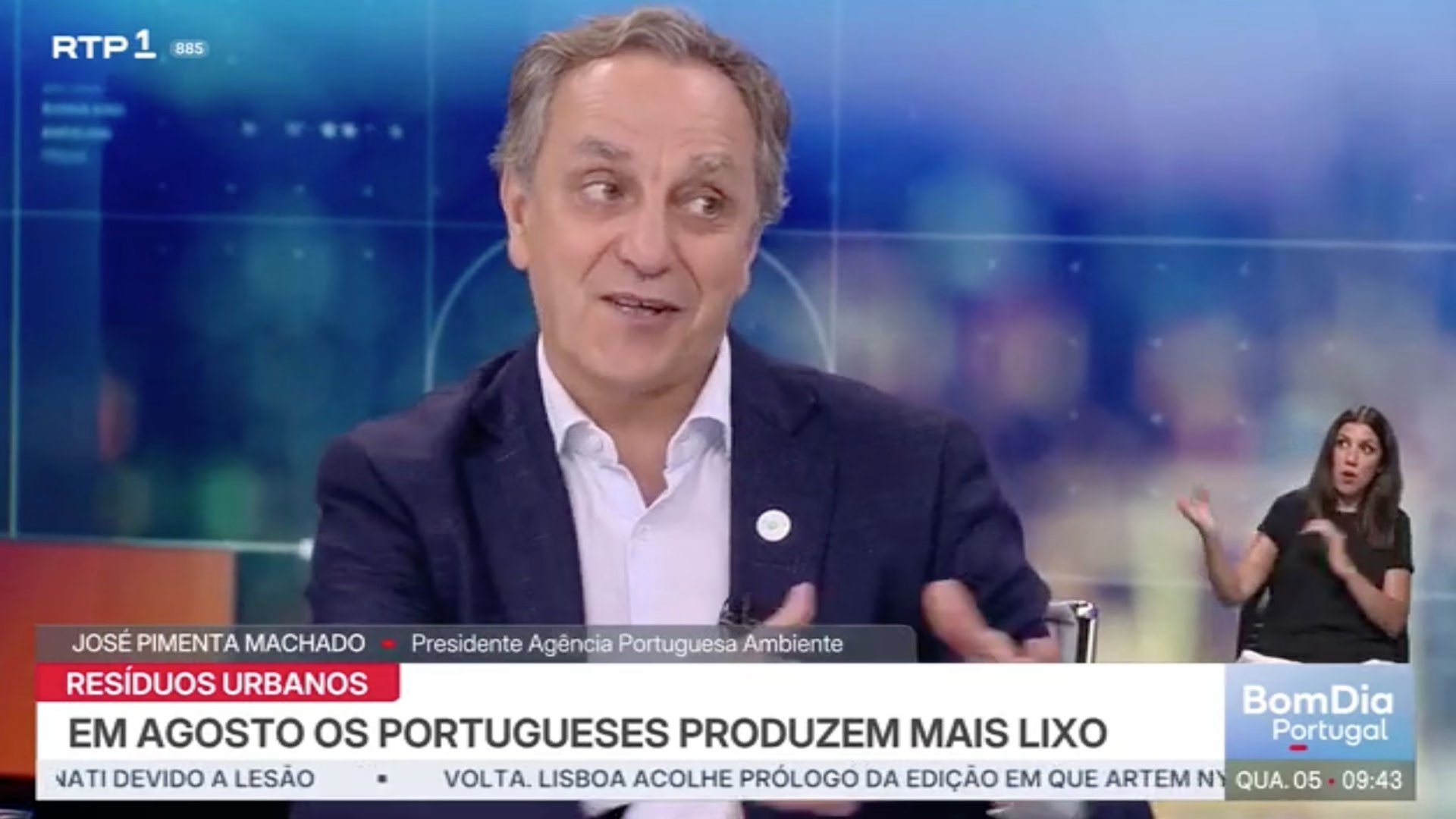
August is the month when the Portuguese generate the most waste. The Portuguese Environmental Agency reveals that 480,000 tons of urban waste were produced last August. A conversation with the president of the Portuguese Environmental Agency, José Pimenta Machado.

Thumbnail do vídeo

SIC – Primeiro Jornal

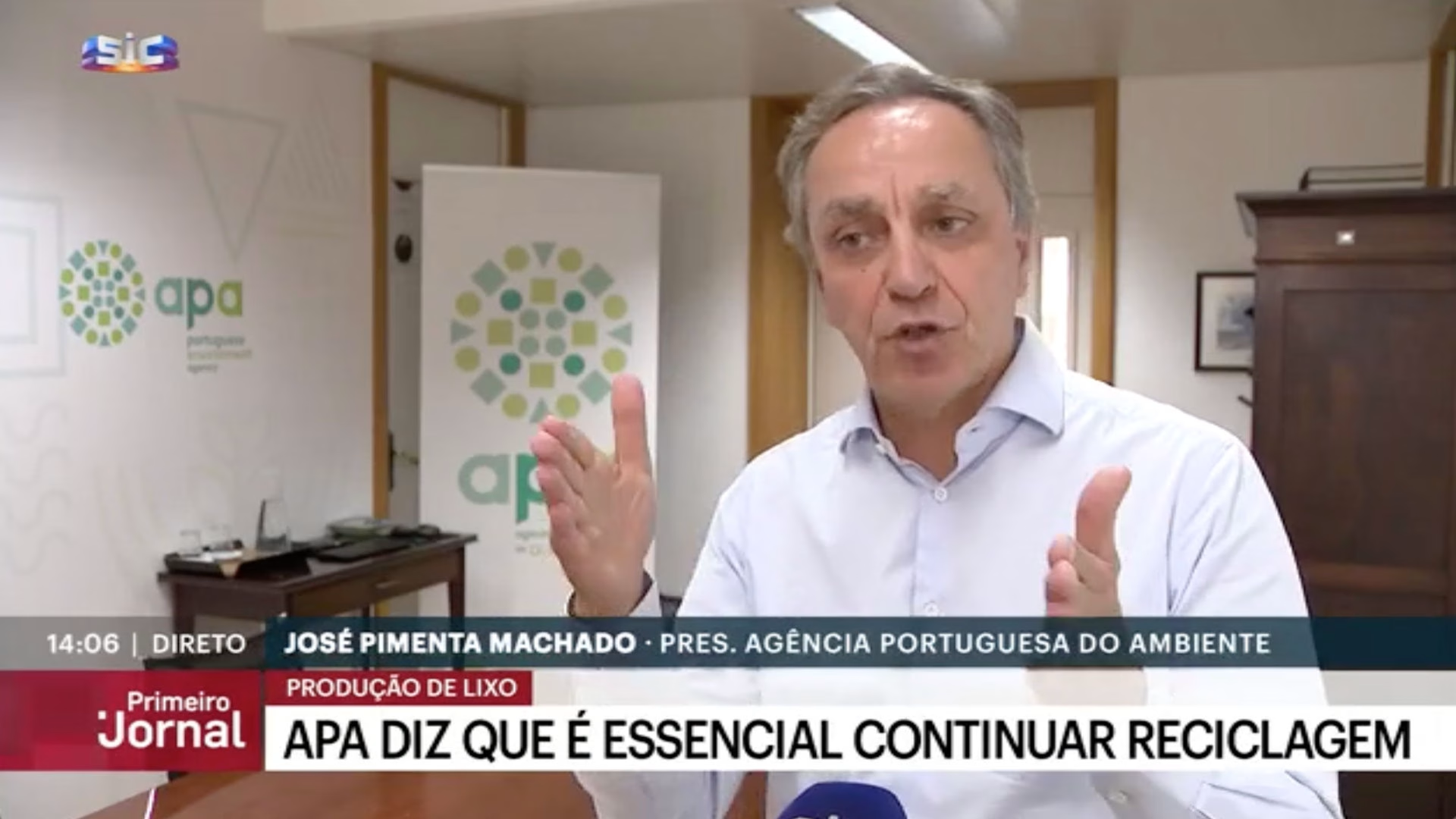
Waste generation spikes during the summer months. Last year, between July and September, nearly 2 million tons were produced—with the highest volume in August. The Portuguese Environmental Agency emphasizes the importance of not forgetting to recycle, even during the holiday season. Statement by José Pimenta Machado, President of the Portuguese Environmental Agency.

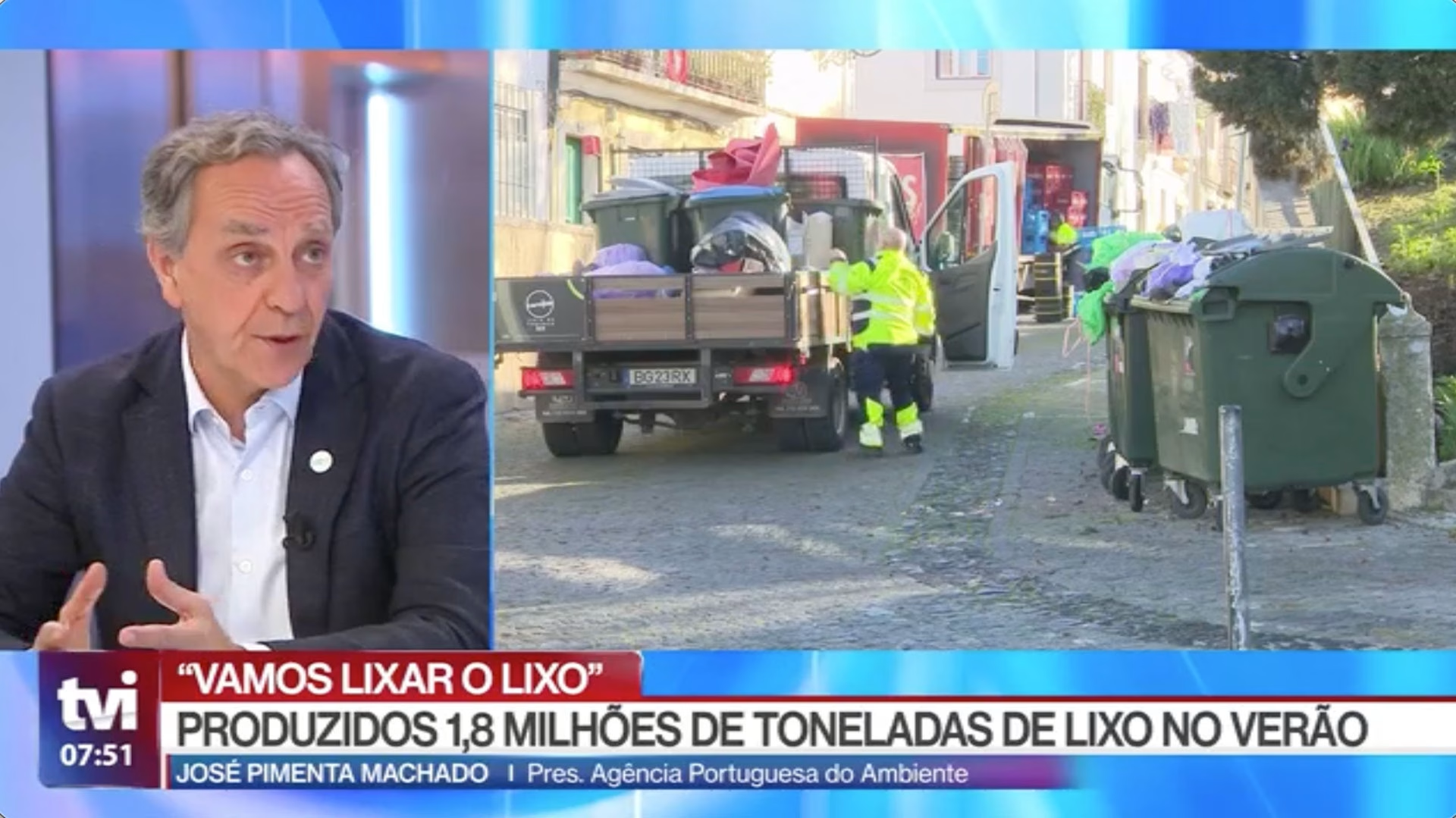
Portugal produces “1.8 million tons of waste” in the summer, putting pressure on landfills

The Portuguese Environmental Agency (APA) warns of an increase in waste generation during the summer, noting that August is the month of greatest concern. Speaking to TSF, APA president José Pimenta Machado stated that “between June and September, the country generates 1.8 million tons of municipal solid waste,” with 480,000 tons produced in August alone.

This rise in waste generation can be attributed to growth in “tourism and the economy,” Machado points out. The agency is promoting the “Let’s separate the waste” campaign to raise public awareness about this issue, particularly regarding “biowaste.” “Bio-waste consists of food scraps, such as rice or potatoes,” which account for 40% of the waste produced.

Compounded by a lack of recycling, the accumulation of trash places immense pressure on the country’s 32 landfills. “Landfills are at 20% of their maximum capacity. They are nearing the end of their lifespan,” Machado warns, adding that Portugal has only “five or six years to change its behavior.”

This shift in habits involves generating “less waste” and sorting it, so that it can be “recovered and transformed into a resource.”

Source

Reduce and recycle. Portugal generates a mountain of 1800000 kilograms of waste in the summer

As August begins—the month when the highest volume of urban waste is generated in Portugal—the Portuguese Environmental Agency (APA) highlights the need to produce less waste and to sort it correctly. After all, the best waste is the waste that is never produced. A new phase of the “Let’s separate the waste” campaign draws attention to the time of year when urban waste generation spikes.

“Between June and September, we produce about 1.8 million tonnes of urban waste [1,800,000 kilograms]—an impressive figure—with August being the month when we generate the most waste, around 480,000 tonnes,” explains José Pimenta Machado. That amounts to 480 million kilograms of trash.

The president of the Portuguese Environmental Agency therefore calls for waste prevention and proper sorting. “Prevention. That must be the top priority. Producing less waste. Whenever we go to the supermarket, we should avoid food waste, make more sustainable purchases, and reuse packaging—which is crucial,” he asserts. “Next, we must sort our waste, remembering that an item placed in the right bin turns into a resource.

This is essential for paper, glass, and plastics, and now for bio-waste—food scraps, which already account for about 38% to 40% of the urban waste we produce,” the APA president adds. “Anything we can do regarding biowaste is fundamental to improving our performance in separate waste collection,” emphasizes José Pimenta Machado.

As for the areas of the country that generate the most trash in August, “they are the areas with the most tourism, where we have the most visitors.” “That is good for the Portuguese economy, but it means more people generating waste,” he notes. “And so, it is in the areas with the most tourism—naturally the Algarve, but the entire coastal strip where we receive the most visitors—that we see higher levels of tourism and greater waste generation.”

José Pimenta Machado also notes that the country produces 5.5 million tons of waste annually, and that by 2025, “we will see a 1.3% increase in the waste burden”—meaning we will reach 5.6 million tons of municipal waste.

“We have to reverse this trend; therefore, a campaign is being launched this year with a fundamental appeal focused—I must insist—on prevention, followed by waste separation,” explains the president of the APA.

Source

APA roadshow on waste separation arrives in Portimão

The Portuguese Environmental Agency’s mobile truck concludes its summer tour dedicated to the proper sorting of urban waste in Portimão. The “Let’s separate the waste” campaign, promoted by the Portuguese Environmental Agency (APA), will visit the Portimão Marina from Friday, July 24, to Sunday, July 26, featuring an awareness-raising initiative on the proper sorting of urban waste.

Portimão will be the final stop of the roadshow, which has traveled through six districts across the country—starting in Braga—aiming to raise awareness about the increase in waste generation during the summer. The mobile truck will be at the Portimão Marina on Friday from 9:00 AM to 6:00 PM, Saturday from 9:00 AM to 8:00 PM, and Sunday from 11:00 AM to 6:00 PM.

The initiative includes a questionnaire on proper waste sorting, a simulator designed to identify participants’ consumption profiles, art workshops using recycled materials, and family-oriented games. The roadshow also features the “excuses wall,” which compiles the reasons people give for not sorting their waste correctly.

According to the APA, the initiative seeks to encourage the adoption of recycling habits. The campaign highlights summer as the period when the highest volume of urban waste is generated in Portugal. Data released by the agency shows that over 1.8 million tons of urban waste were produced between June and September—with more than 480,000 tons generated in August alone.

The APA therefore emphasizes the need to continue sorting waste during the holidays and to ensure it is sent for recycling in order to reduce environmental impact. “Contrary to common belief, summer is consistently the period with the highest waste generation in Portugal.” This year, this trend is expected to continue. However, it is important to emphasize that trash takes no breaks and does not rest during the summer.

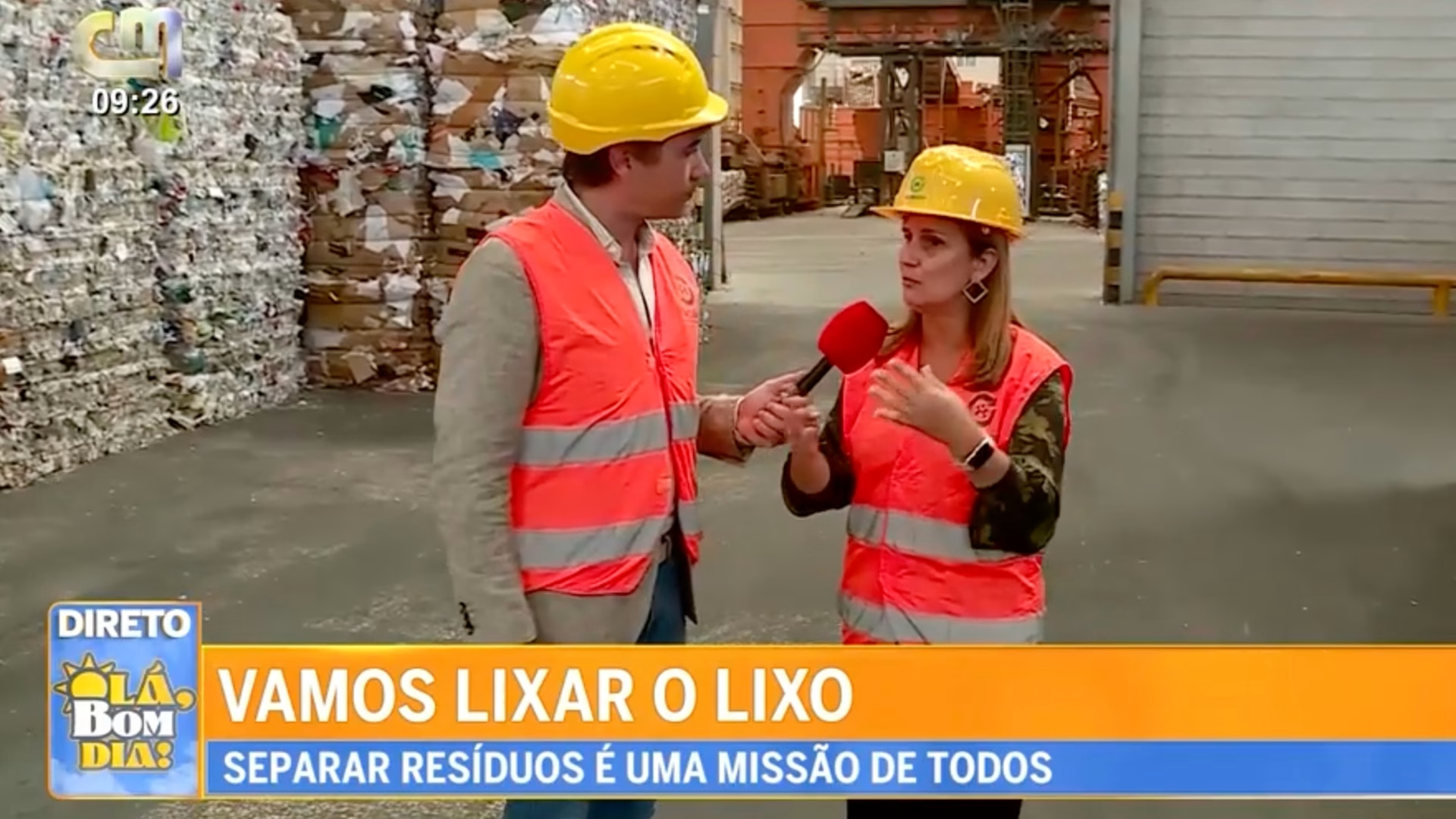
“With this initiative, we hope to engage communities in a problem that belongs to everyone, from the Algarve to the Minho,” says José Pimenta Machado, president of the APA. Portimão marks the final stop of the roadshow’s summer tour, although the “Vamos Lixar o Lixo” campaign will continue until the end of 2026.

Source

Portimão hosts the “Let’s separate the waste” campaign

The Portuguese Environmental Agency (APA) marked the start of summer with a communication, awareness-raising, and information campaign highlighting the urgent need for proper urban waste sorting in Portugal; the initiative has traveled through six districts across the country, from Braga to Portimão.

The final stop will be at the Portimão Marina on Friday, July 24 (9:00 AM – 6:00 PM), Saturday, July 25 (9:00 AM – 8:00 PM), and Sunday, July 26 (11:00 AM – 6:00 PM). Using a traveling truck—or “Roadshow”—the agency invites communities to reflect on the importance of sorting the waste generated in their homes. The Roadshow features a quiz testing the public’s knowledge of proper waste sorting, a sustainable consumption simulator that identifies consumer profiles, workshops for creating art from recycled materials, and family-oriented games, among other activities.

This latest phase of the APA’s “Let’s separate the waste” campaign draws attention to the time of year when urban waste generation spikes. Between June and September, over 1.8 million tons of urban waste were produced, with Portugal generating more than 480,000 tons in August alone.

“Contrary to popular belief, summer is consistently the period with the highest waste generation in Portugal. This trend is expected to continue this year. However, it is important to emphasize that trash doesn’t take a break or rest during the summer. With this initiative, we hope to engage communities in an issue that concerns everyone, from the Algarve to the Minho region,” says José Pimenta Machado, President of the APA.

Source