Summer is the time when we generate the most waste. APA calls for waste sorting
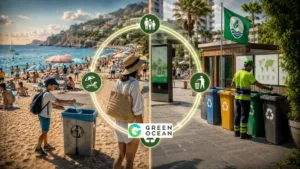
The Portuguese Environmental Agency is stepping up its “Let’s separate the waste” campaign this summer; the initiative was created to change recycling habits and reduce reliance on landfills.
The Portuguese Environmental Agency (APA) is marking the start of summer with a communication and awareness-raising drive that will travel through six districts—from Coimbra to Portimão—to highlight the rise in urban waste generation during the warmer months. This initiative is part of the “Let’s separate the waste” campaign, launched by the APA in December 2025. With a planned 15-month duration and an investment of €4.3 million, the campaign represents the agency’s commitment to changing waste separation and recycling habits and reducing dependence on landfills.
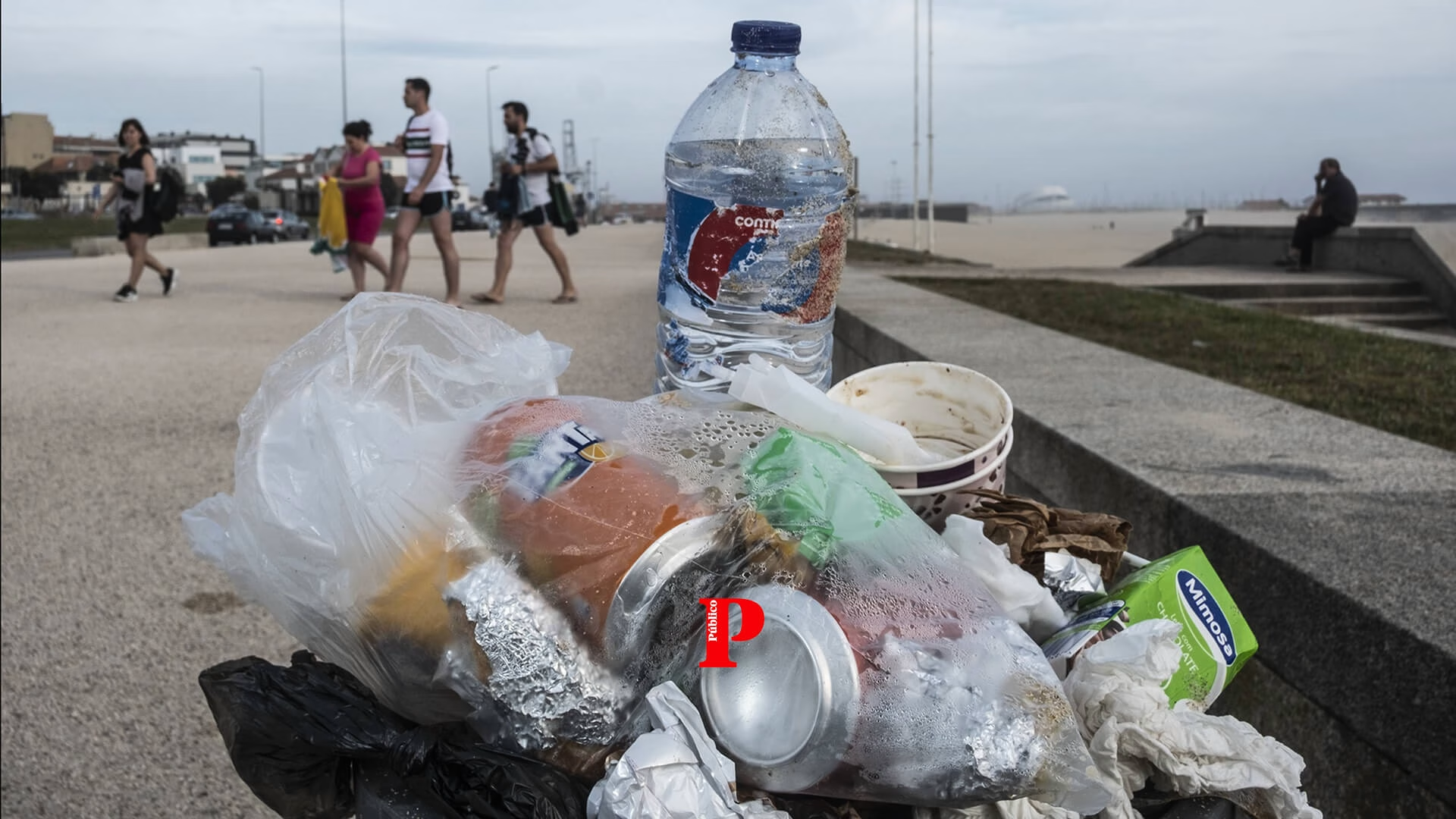
This new phase of the campaign coincides with the period APA identifies as the most critical of the year for waste generation in Portugal. According to data released by the agency, over 1.8 million tons of urban waste were produced between June and September 2025, with August alone exceeding 480,000 tons. The APA therefore maintains that July and August are the most problematic months, challenging the notion that summer brings a respite from the environmental impact associated with consumption.
“Contrary to common belief, summer is consistently the period with the highest waste generation in Portugal. This trend is expected to continue this year. However, it is important to emphasize that waste does not take a break or rest during the summer,” states José Pimenta Machado, APA’s president, in a press release issued this Monday. The goal, he adds, is to engage “communities in a problem that belongs to everyone, from the Algarve to the Minho.”
It is against this backdrop that the APA is now focusing its message on the holiday season—a time when families and groups of friends spend more time together, whether at home or away, and when, according to the agency, proper waste separation must not be neglected. The campaign seeks to highlight that the seasonal increase in waste generation calls for greater attention to daily habits, ranging from consumption choices to the proper routing of materials for recycling.
The “mural of excuses”
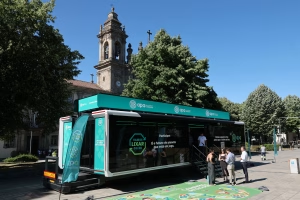
The campaign takes the form of a tour—or “roadshow,” in the words of the APA—featuring a traveling truck that will visit Coimbra, Aveiro, Braga, Castelo Branco, Évora, and Portimão over the course of 18 days. The initiative includes a waste-sorting quiz, a sustainable consumption simulator designed to identify consumer profiles, workshops for creating art from recycled materials, and games tailored to different age groups.
The tour will also feature an “excuses wall,” where reasons given by the public for not sorting waste correctly will be collected at each stop. The APA presents this element as a provocative tool designed to confront the tendency to downplay the issue and to challenge the public to “make fewer excuses and recycle more.”
The schedule released by the agency begins in Coimbra (Praça da República) from June 19 to 21, followed by stops in Aveiro (June 26–28), Braga (July 3–5), Castelo Branco (July 10–12), Évora (July 17–19), and Portimão (July 24–26). In every city, the event will run on Fridays from 9:00 AM to 6:00 PM, Saturdays from 9:00 AM to 8:00 PM, and Sundays from 11:00 AM to 6:00 PM.
This initiative is part of the agency’s broader strategy to tackle a problem it classifies as structural. When the campaign was launched, the APA set out to create a “social movement” capable of changing Portuguese people’s behavior regarding waste, in a country where separate waste collection remains virtually stagnant and landfill disposal continues to account for a significant share of waste management.
“APA’s appeal is clear: let’s sort our waste before the future gets screwed,” stated José Pimenta Machado at the time regarding “the Let’s separate the waste” campaign.
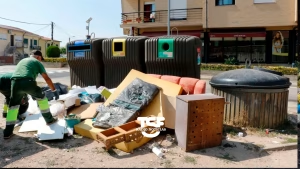
Data from APA itself points to a persistent failure in source separation, particularly concerning bio-waste. According to the agency, 1.3 million tons of food waste go unsorted in Portugal each year. For APA’s president, “waste generation increases every year, separate collection is virtually stagnant, and reliance on landfills remains very high,” making the waste sector “one of the country’s greatest environmental challenges.”