Braga hosts the “Let’s separate the waste” roadshow to accelerate biowaste recycling

The project aims to engage the community in adopting more sustainable habits, reinforcing the importance of the separate collection of biowaste and reducing the amount of organic waste sent to landfills.

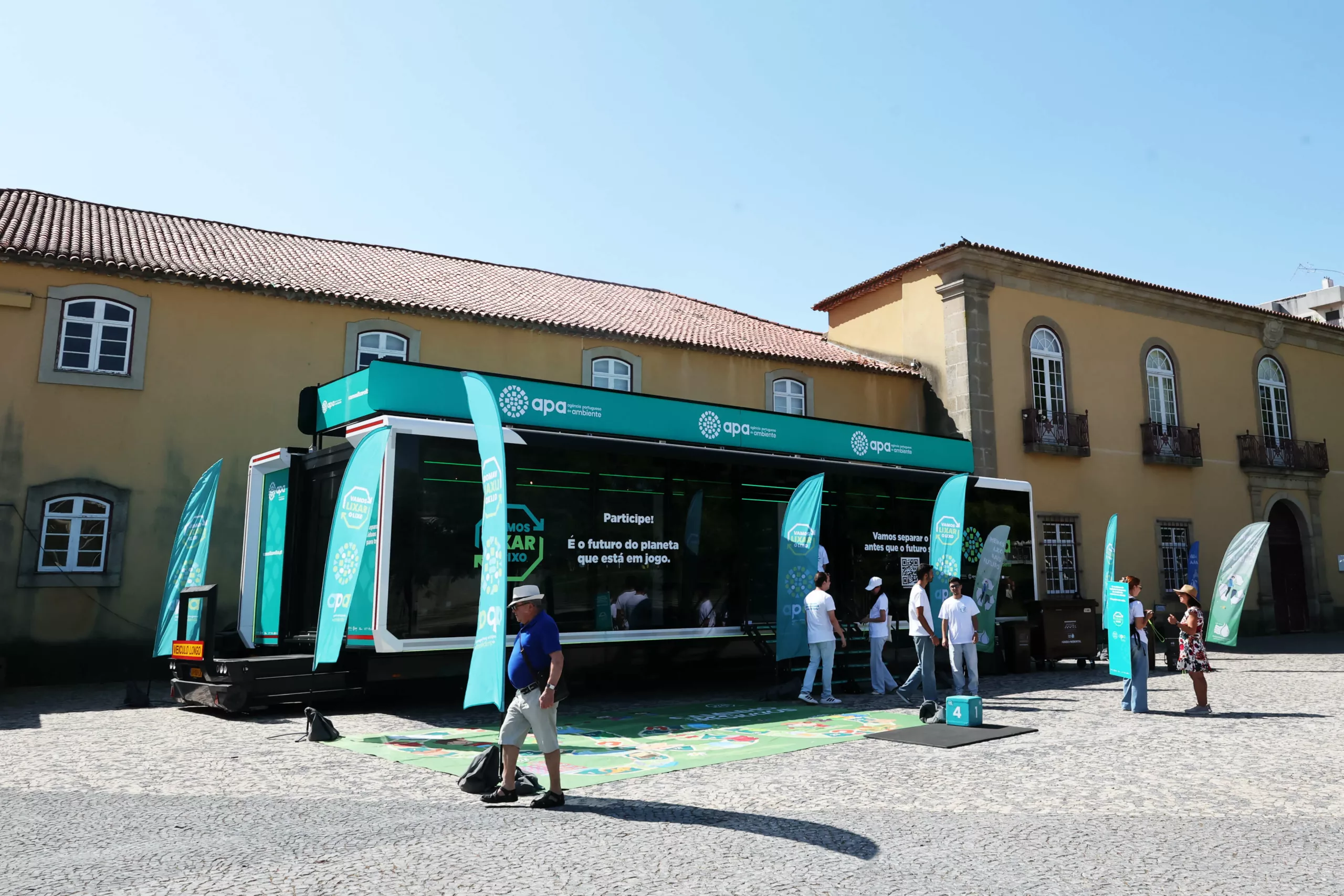
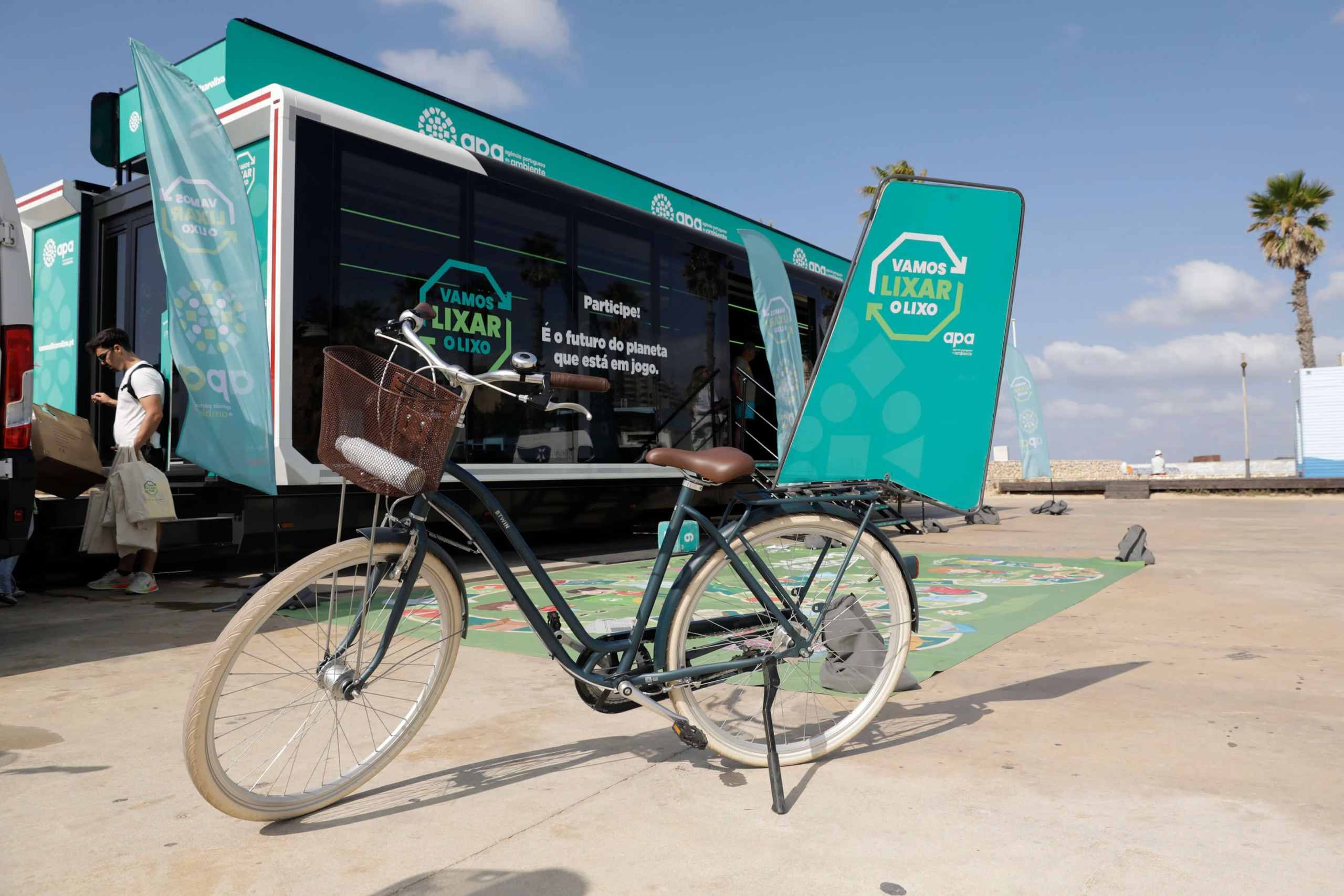
On July 3, 4, and 5, Braga will host the “Let’s separate the waste” national roadshow at Praça da República. This is a nationwide initiative promoted by the Portuguese Environmental Agency (APA), supported by the Environmental Fund and co-financed by European funds; it is dedicated to raising public awareness and mobilizing the population regarding the proper separation and recovery of biowaste.

The project aims to engage the community in adopting more sustainable habits, reinforcing the importance of the separate collection of biowaste and reducing the amount of organic waste sent to landfills.

The official presentation of the roadshow in Braga was attended by João Rodrigues, the Mayor, who underscored the initiative’s crucial impact on the municipality’s future. “This project is vital for waste management in a city that is continuously growing and needs to adjust its environmental responses to that dynamic,” he noted on the occasion.

João Rodrigues also highlighted the strategic focus on “educating the youth,” emphasizing that “it is fundamental to teach the importance of waste separation from an early age, ensuring that new generations grow up knowing that biowaste is very important” and that its proper treatment makes all the difference.

Meanwhile, the Secretary of State for the Environment, João Manuel Esteves, acknowledged the project’s scale and ambition, stating that this commitment is “important for everyone.” The official took the opportunity to stress the national vision for the sector: “We want a clean Portugal”—a goal that, according to him, depends directly on the success of grassroots initiatives like this one.

Also present at the session, the President of the Portuguese Environmental Agency (APA), José Pimenta Machado, highlighted seasonal sustainability challenges, noting that “with the arrival of summer, we generate more waste,” which makes reinforcing these awareness-raising campaigns among residents and visitors “even more urgent.”

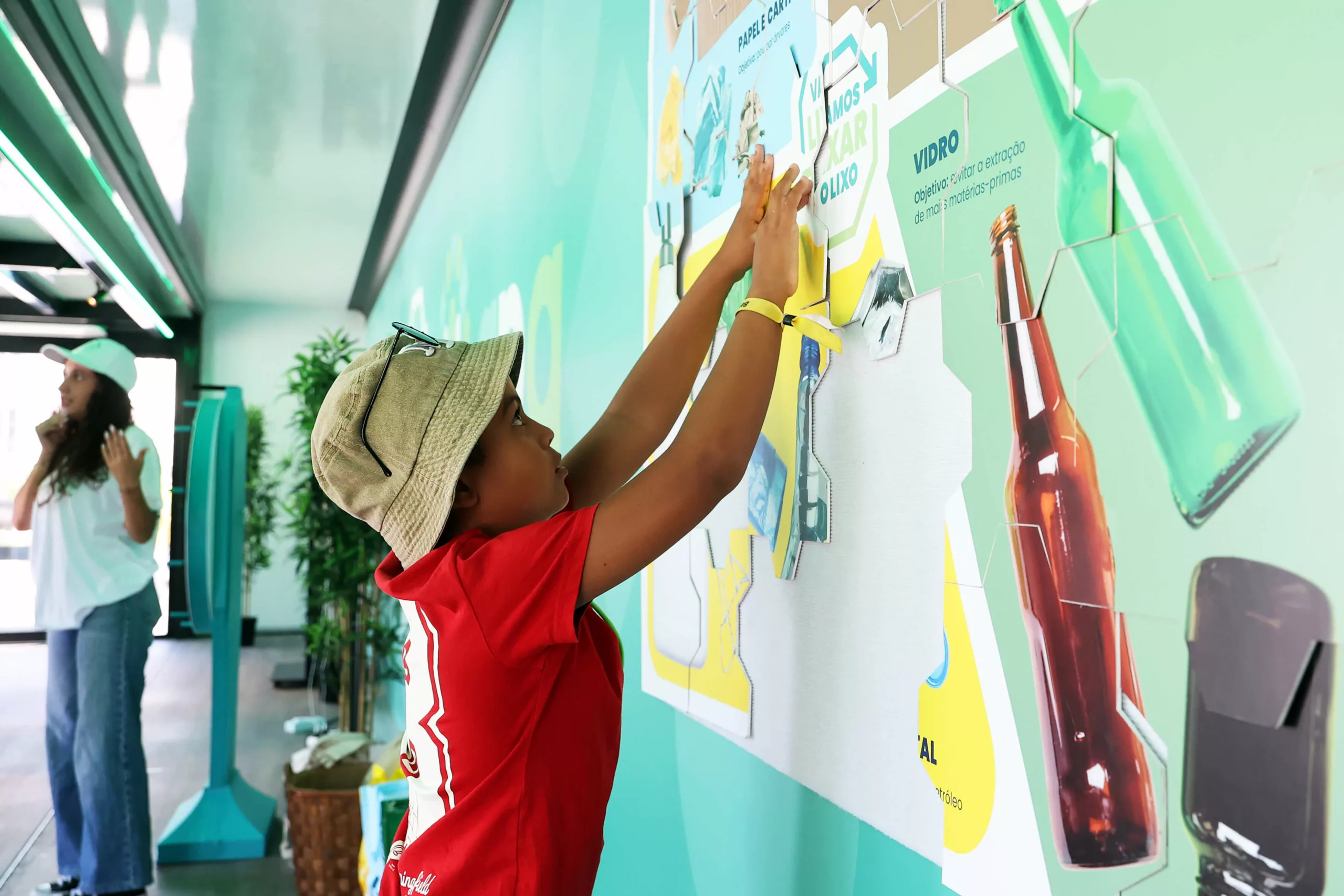
Around 150 children from local schools and social welfare institutions also joined the initiative. This strong participation by young people gave special significance to the project’s launch, underscoring the importance of environmental education from an early age and the involvement of new generations in adopting more sustainable behaviors. Through fun and educational activities, the children learned about best practices for sorting and recovering organic waste, becoming active agents in promoting a culture of environmental responsibility.

Source

Municipality of Braga hosts “Let’s separate the waste” roadshow to accelerate biowaste recycling

On July 3, 4, and 5, Braga’s Praça da República is hosting the national roadshow “Let’s separate the waste”. This nationwide initiative is promoted by the Portuguese Environmental Agency (APA) with support from the Environmental Fund and co-financing from European funds; it is dedicated to raising public awareness and mobilizing the population regarding the proper separation and recovery of biowaste.

The project aims to engage the community in adopting more sustainable habits, reinforcing the importance of separate biowaste collection and reducing the amount of organic waste sent to landfills.

The official presentation of the roadshow in Braga was attended by Mayor João Rodrigues, who underscored the initiative’s crucial impact on the municipality’s future. “This project is vital for waste management in a city that is constantly growing and needs to adapt its environmental responses to that dynamic,” he noted.

João Rodrigues also highlighted the strategic focus on “educating the youth,” emphasizing that “it is fundamental to teach the importance of waste separation from an early age, ensuring that new generations grow up knowing that bio-waste is highly important” and that proper treatment makes a significant difference.

Meanwhile, the Secretary of State for the Environment, João Manuel Esteves, acknowledged the project’s scale and ambition, stating that this commitment is “important for everyone.” He took the opportunity to stress the national vision for the sector: “We want a clean Portugal”—a goal that, according to him, depends directly on the success of grassroots initiatives like this one.

Also present at the event was the President of the Portuguese Environmental Agency (APA), José Pimenta Machado, who drew attention to seasonal sustainability challenges. He noted that “with the arrival of summer, we produce more waste,” making the reinforcement of these awareness campaigns among residents and visitors “even more urgent.”

Around 150 children from local schools and non-profit social organizations also joined the initiative. This strong participation by young people gave special significance to the project’s launch, reinforcing the importance of environmental education from an early age and the involvement of new generations in adopting more sustainable behaviors. Through engaging educational activities, the children learned about best practices for sorting and recovering organic waste, becoming active agents in promoting a culture of environmental responsibility.

Source

In Braga, APA’s president says Portugal needs to “race” to meet waste targets.

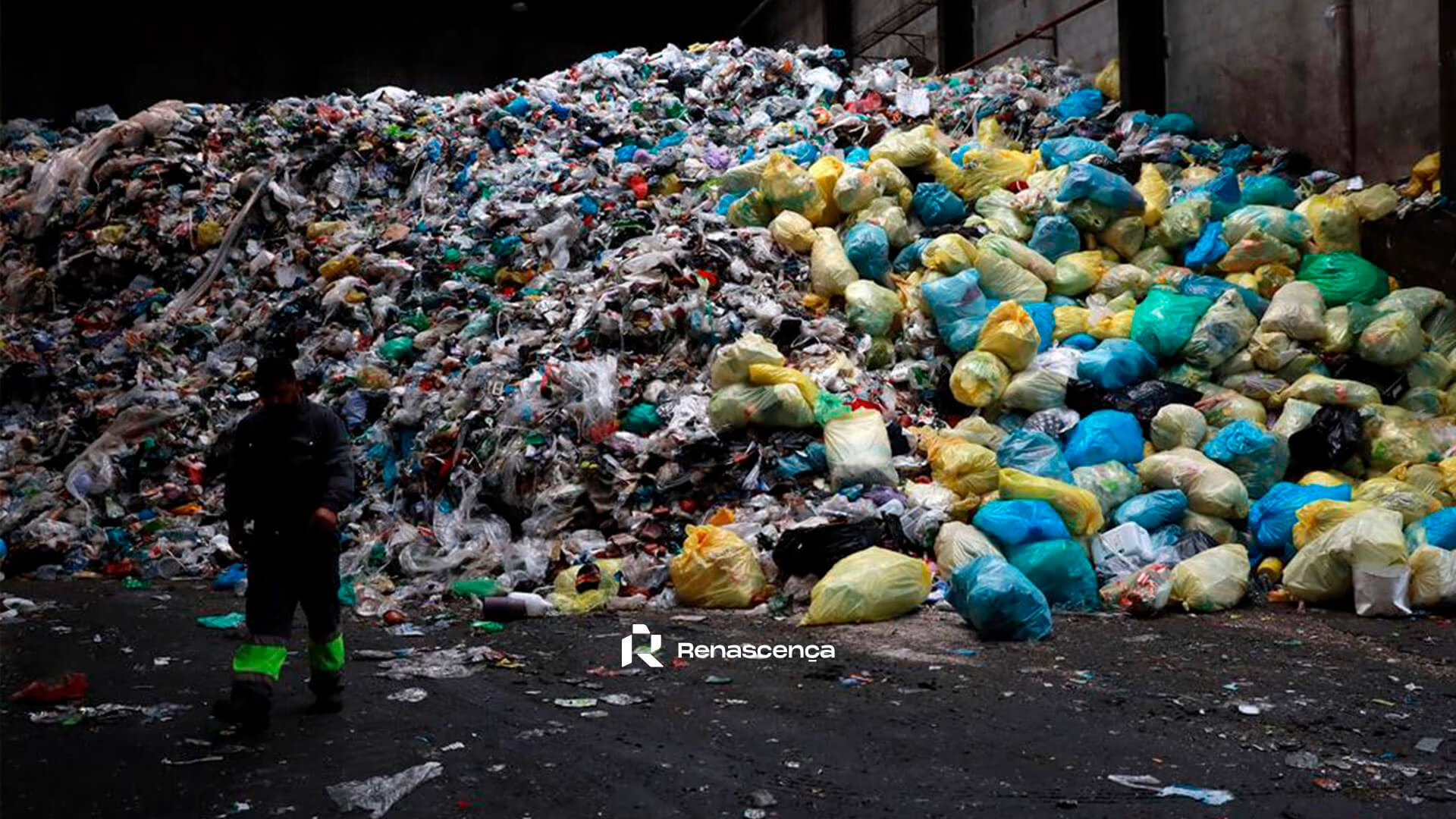
José Pimenta Machado, president of the Portuguese Environmental Agency (APA), expressed regret today that Portugal sends 50% of its waste to landfills and warned that “we need to pick up the pace and make changes,” as the goal is to reduce this figure to 10% by 2035.

Speaking to journalists in Braga—where he took part in an awareness-raising event for the “Let’s separate the waste” campaign—José Pimenta Machado was blunt in his assessment of the country’s waste management performance.

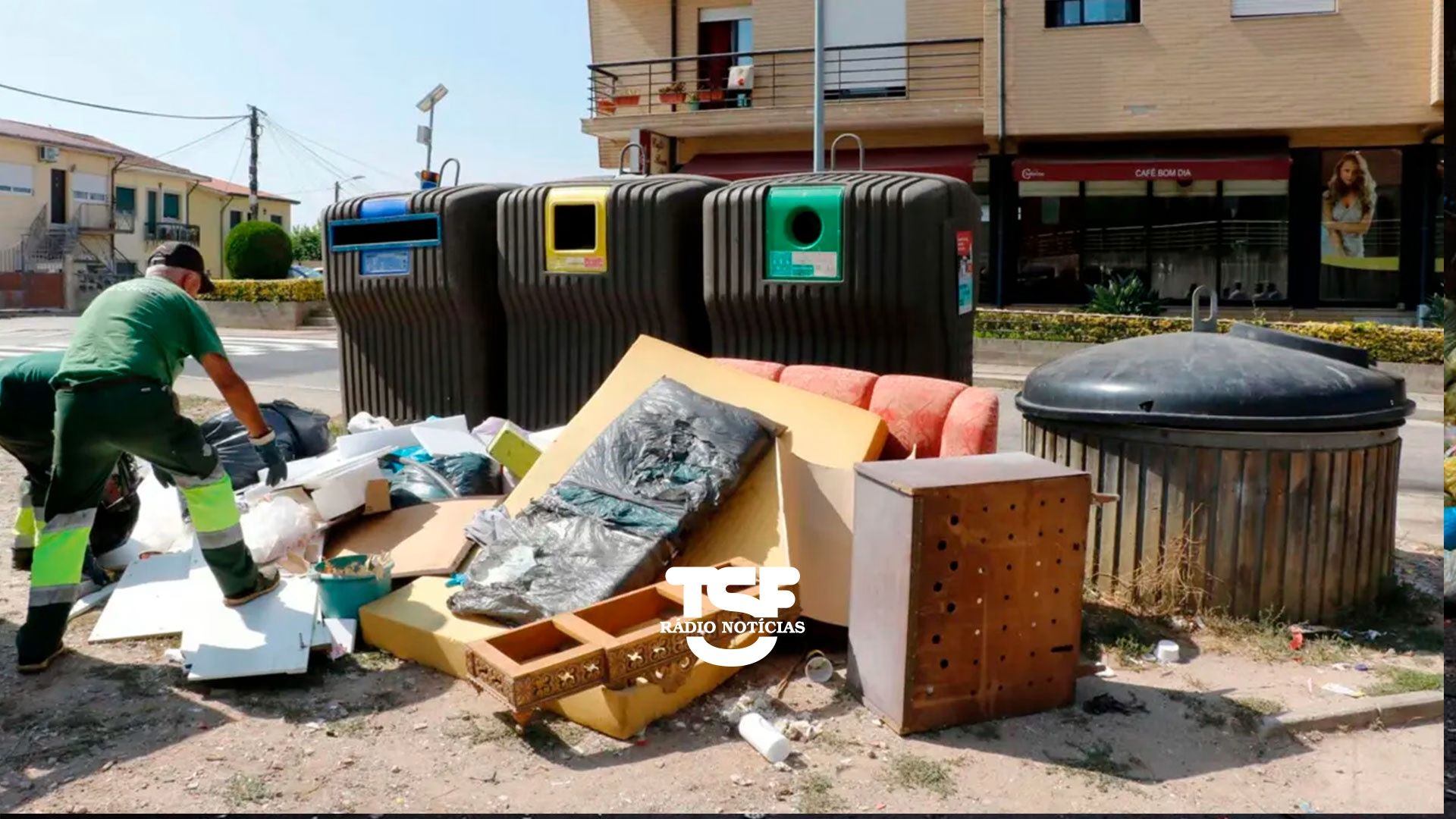
“The bad news is that, over the last seven years, our figures for separate waste collection have stagnated; they haven’t risen above 20%. We want to see a significant increase, particularly regarding bio-waste (…). And more than 50% of waste goes to landfills. It is no longer possible to build new landfills in Portugal. Therefore, the focus must be upstream—on collection, prevention, and generating less waste. That is where our hope lies,” he said.

APA’s president reiterated key national waste management targets to underscore the call for waste separation. Alongside the Secretary of State for the Environment, João Manuel Esteves, and the Mayor of Braga, João Rodrigues, he emphasized that this is a collective effort involving both the central government and local authorities.

“We have a target for 2035: we need to reach a 65% rate [for waste separation]. So, we have to move—we have to pick up the pace. As I mentioned, we currently send over 50% of waste to landfills, and we must reduce that to 10% by 2035. This is a major challenge for the country. We all have a role to play in this,” he stressed.

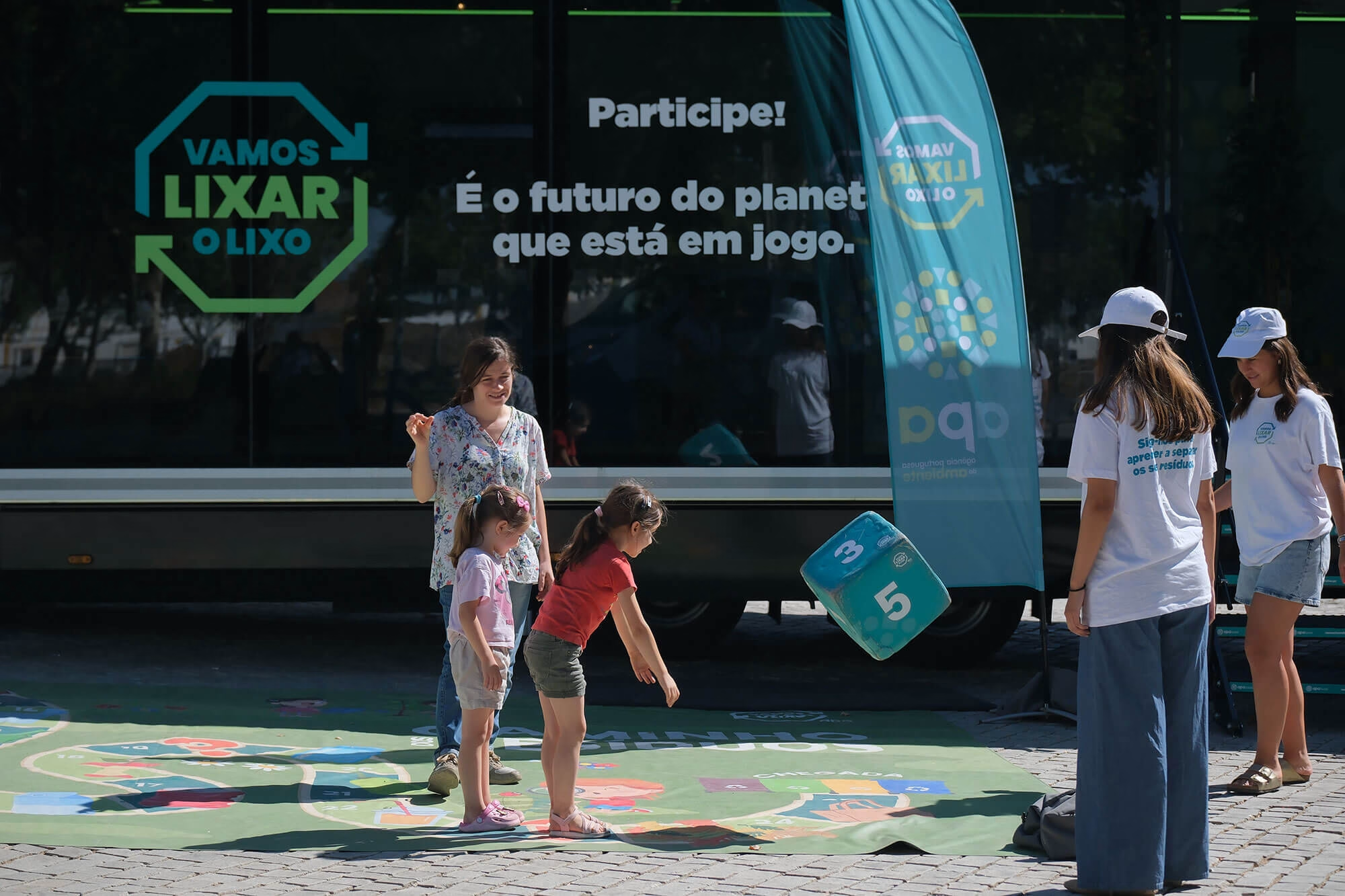
The “Let’s separate the waste” campaign is touring the country with a physical installation featuring exhibits, information, and games designed specifically for children and young people; the site is also open to school visits, as highlighted by João Manuel Esteves.

“Younger people have a major advantage: they force us all to think. We have to do better; we have to sort our waste (…). We want a circular economy—one that makes use of exactly what we throw away, turning it into value,” said the official, highlighting the importance of this campaign, which takes place in the summer because that is when the most waste is generated. “It is in the summer that we produce the most waste.

It is in the summer—during those four months from June to September—that the country generates 40% of its total waste. Each of us produces half a ton of waste annually. That is 519 kilograms a year, or 1.4 kilograms a day. And within that 1.4 kilograms, bio-waste accounts for 40%,” noted APA’s president.

Pimenta Machado added another appeal: “The best waste is the waste that isn’t produced in the first place—hence our focus on prevention and our daily choices. We often end up burying valuable products; if you sort your waste, you can extract value from it, create a product, or even produce green gas.”

After the summer focus, the “Let’s separate the waste” campaign will continue through the end of the year.

The roadshow includes a quiz to test public knowledge on proper waste sorting, a sustainable consumption simulator that identifies consumer profiles, workshops for creating art from recycled materials, and games. It also features an “mural of excuses,” displaying the reasons people often give for not sorting their waste correctly.

The APA—a public institute within the State’s indirect administration—is the entity responsible for implementing environmental policies in Portugal, with a mandate covering monitoring, planning and assessment, licensing, and enforcement.

Source

APA’s president says Portugal needs to “run and change” to meet waste targets

Speaking to journalists in Braga—where he took part in an awareness-raising event for the “Let’s separate the waste” campaign—José Pimenta Machado was blunt in his assessment of the country’s waste management performance.

José Pimenta Machado, president of the Portuguese Environmental Agency (APA), lamented today that Portugal sends 50% of its waste to landfills and warned that “we need to pick up the pace and make changes,” as the goal is to reduce this figure to 10% by 2035.

Speaking to journalists in Braga—where he took part in an awareness-raising event for the “Let’s separate the waste” campaign—José Pimenta Machado was blunt in his assessment of the country’s waste management performance.

“The bad news is that, over the last seven years, our figures for separate waste collection have stagnated; they haven’t risen above 20%. We want to see a significant increase—especially regarding biowaste (…). And more than 50% of waste goes to landfills. It is no longer possible to build new landfills in Portugal. Therefore, the focus must be upstream—on collection, prevention, and generating less waste. That is where our hope lies,” he said.

APA’s president highlighted key national waste management targets to underscore the call for waste separation. Alongside the Secretary of State for the Environment, João Manuel Esteves, and the Mayor of Braga, João Rodrigues, he emphasized that this is a collective effort involving both central government authorities and local municipalities.

“We have a target for 2035: we need to reach a 65% rate [for waste separation]. So, we have to move—we have to pick up the pace. And, as I mentioned, we currently send over 50% of waste to landfills, a figure we must reduce to 10% by 2035. This is a major challenge for the country. We all have a role to play in this,” he stressed.

The “Let’s separate the waste” campaign is touring the country with a physical setup featuring exhibits, information, and games specifically designed for children and young people; it is also open to school visits, as highlighted by João Manuel Esteves.

“Young people have a great advantage: they compel all of us to think. We have to do better; we have to sort our waste (…). We want a circular economy—one that makes use of exactly what we throw away, transforming it into value,” said the official, emphasizing the importance of this campaign, which takes place in the summer because that is when the most waste is generated.

“It is in the summer that we produce the most waste. It is during these four months—from June to September—that the country generates 40% of its total waste. Each of us produces half a ton of waste annually. That is 519 kilograms a year, or 1.4 kilograms a day. And within that 1.4 kilograms, bio-waste accounts for 40%,” noted APA’s president.

Pimenta Machado added another appeal: “The best waste is the waste that isn’t produced in the first place—hence our focus on prevention and our daily choices. We often end up burying valuable products; if you sort your waste, you can recover that value, create a new product, or even produce green gas.”

Following its summer focus, the “Let’s separate the waste” campaign will continue through the end of the year.

The roadshow includes a quiz to test public knowledge on proper waste sorting, a sustainable consumption simulator that identifies consumer profiles, workshops for creating art from recycled materials, and various games. It also features an “mural of excuses” displaying the reasons people often give for failing to sort their waste correctly.

The APA—a public institute within the State’s indirect administration—is the entity responsible for implementing environmental policies in Portugal, with a mandate covering monitoring, planning and evaluation, licensing, and enforcement.

Source

Portugal needs to “run and change” to meet waste targets, says APA’s president in Braga

Speaking to journalists in Braga—where he took part in an awareness-raising event for the “Let’s separate the waste” campaign—José Pimenta Machado was blunt in his assessment of the country’s waste management performance.

“The bad news is that, over the last seven years, our figures for separate waste collection have stagnated; they haven’t risen above 20%. We want to see a significant increase, especially regarding bio-waste (…). Furthermore, over 50% of waste ends up in landfills. In Portugal, it is no longer possible to build new landfills. Therefore, the focus must be upstream—on collection, prevention, and generating less waste. That is where our hope lies,” he said.

APA’s president highlighted national waste management targets to underscore the call for waste separation. Alongside the Secretary of State for the Environment, João Manuel Esteves, and the Mayor of Braga, João Rodrigues, he emphasized that this is a collective effort involving both the central government and local authorities.

“We have a target for 2035: we need to reach a 65% rate [for waste separation]. So, we need to get moving—we need to pick up the pace. As I mentioned, we currently send over 50% of our waste to landfills, and we must reduce that to 10% by 2035. This is a major challenge for the country. We all have a role to play in this,” he stressed.

The “Let’s separate the waste” campaign is touring the country with a physical setup featuring exhibits, information, and games designed specifically for children and young people; the site is also open to school visits, as João Manuel Esteves pointed out.

“Young people have a great advantage: they compel all of us to think. We need to do better; we need to separate our waste (…). We want a circular economy—one that makes use of exactly what we throw away, turning it into value,” the official said, highlighting the importance of holding this campaign during the summer, as this is the time of year when the most waste is produced. “It is in the summer that we generate the most waste.

It is in the summer—during these four months from June to September—that the country generates 40% of Portugal’s waste. Each of us produces half a tonne of waste annually. That amounts to 519 kilograms per year, or 1.4 kilograms per day. And within that 1.4 kilograms per day, bio-waste accounts for 40%,” noted APA’s president.

Pimenta Machado added another appeal: “The best waste is the kind that isn’t produced in the first place—hence our focus on prevention and our daily choices. We often bury products that actually have value; if you separate waste, you can recover that value, create a new product, or even produce ‘green gas’.”

Following its summer focus, the “Let’s separate the waste” campaign will continue through the end of the year.

The roadshow features a quiz on public knowledge regarding proper waste separation, a sustainable consumption simulator that identifies consumer profiles, workshops for creating art from recycled materials, and various games. It also includes an “mural of excuses” displaying the reasons people often give for failing to separate waste correctly.

The APA—a public institute within the State’s indirect administration—is responsible for implementing environmental policies in Portugal, with a mandate covering monitoring, planning, assessment, licensing, and enforcement.

José Pimenta Machado, president of the Portuguese Environmental Agency (APA), expressed regret this Friday that Portugal sends 50% of its waste to landfills, warning that “we need to act fast and change” because the target is to reduce this figure to 10% by 2035.

Source

Portugal needs to “run and change” to meet waste targets, says APA president in Braga

José Pimenta Machado, president of the Portuguese Environmental Agency (APA), expressed regret this Friday that Portugal sends 50% of its waste to landfills and warned that “we need to pick up the pace and make changes,” as the goal is to reduce this figure to 10% by 2035.

Speaking to journalists in Braga—where he took part in an awareness-raising event for the “Let’s separate the waste
” campaign—Pimenta Machado was blunt in his assessment of the country’s waste management performance.

“The bad news is that, over the last seven years, our figures for separate waste collection have stagnated; they haven’t risen above 20%. We want to see a significant increase, especially regarding bio-waste (…). And more than 50% of waste goes to landfills. It is no longer possible to build new landfills in Portugal. Therefore, the focus must be upstream—on collection, prevention, and generating less waste. That is where our hope lies,” he said.

APA’s president highlighted national waste management targets to underscore the call for waste separation. Alongside the Secretary of State for the Environment, João Manuel Esteves, and the Mayor of Braga, João Rodrigues, he emphasized that this is a collective effort involving both the central government and local authorities.

“We have a target for 2035: we need to reach a 65% rate [for waste separation]. So, we have to move fast; we have to pick up the pace. As I mentioned, we currently send over 50% of waste to landfills, and we need to cut that down to 10% by 2035. This is a major challenge for the country. We are all called upon to tackle this,” he stressed.

The “Let’s separate the waste” campaign is touring the country with a physical setup featuring exhibits, information, and games designed specifically for children and young people; the site is also open to school visits, as noted by João Manuel Esteves.

“Younger people have a major advantage: they compel all of us to think. We have to do better; we have to sort our waste (…). We want a circular economy—one that makes use of exactly what we throw away, turning it into value,” said the official, highlighting the importance of this campaign, which takes place in the summer because that is the time of year when the most waste is generated.

“It is in the summer that we generate the most waste. It is during these four months—from June to September—that the country produces 40% of its total waste. Each of us generates half a ton of waste annually. That amounts to 519 kilograms a year, or 1.4 kilograms a day. And within that 1.4 kilograms of daily waste, bio-waste accounts for 40%,” noted APA’s president.

Pimenta Machado added another appeal: “The best waste is the waste that isn’t produced in the first place—hence our focus on prevention and our daily choices. Often, we end up burying products that actually have value; if you separate them, you can recover that value, create a new product, or even produce green gas.”

Following the summer focus, the “Let’s separate the waste” campaign will continue through the end of the year.

The roadshow features a quiz to test public knowledge on proper waste separation, a sustainable consumption simulator that identifies consumer profiles, workshops for creating art from recycled materials, and various games. It also includes a “mural of excuses” displaying the reasons people often give for failing to separate their waste correctly.

The APA—a public institute within the State’s indirect administration—is the entity responsible for implementing environmental policies in Portugal, with a mandate covering monitoring, planning and evaluation, licensing, and enforcement.

Source