Braga hosts APA roadshow to teach young people how to ‘separate the waste’
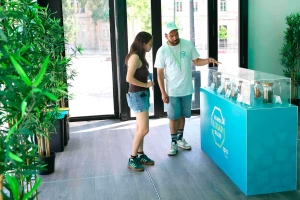
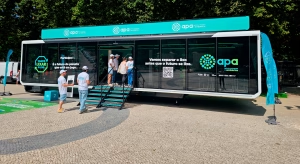
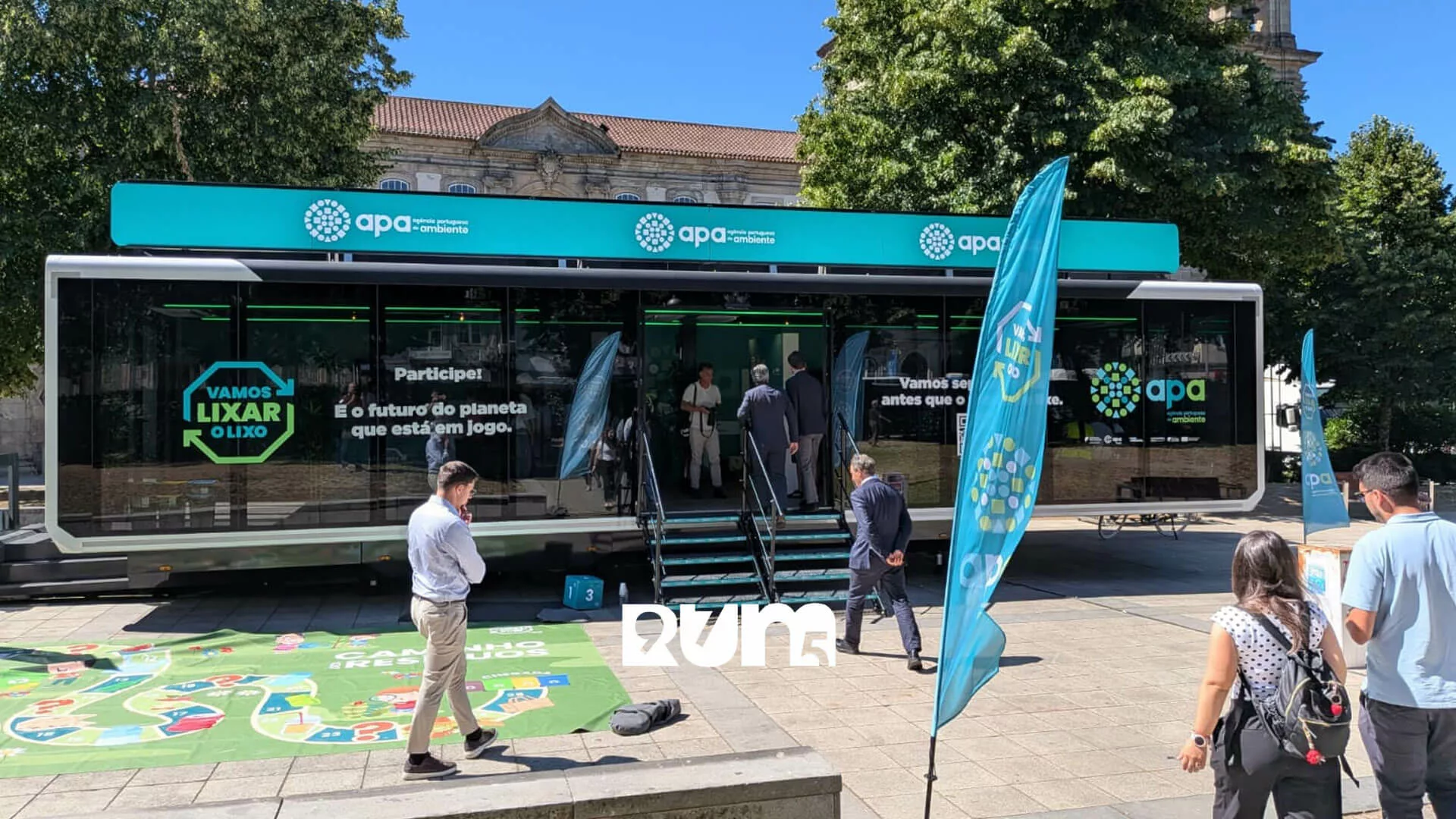
There is “bad news” in Portugal regarding separate waste collection, but the Portuguese Environmental Agency is already taking action to address it. From July 3 to 5, Praça da República is hosting a series of awareness-raising activities on how to manage household waste.
With each passing year, the Portuguese people produce more waste. In 2024—the most recent year for which records exist—the country generated 5.5 million tons of municipal waste (a 4% increase over the previous year), 40% of which consisted of bio-waste. This growth has not been matched by the volume of separated waste, which has stagnated at 20% for the past seven years. A response is needed; consequently, Braga is joining the cause by hosting the “Let’s separate the waste” project, organized by the Portuguese Environmental Agency (APA).
The APA initiative arrived in Braga this Friday, July 3, aiming to encourage people to reflect on how they sort their waste at home while promoting awareness-raising activities regarding the behaviors they should adopt.
The session was attended by the president of the Portuguese Environmental Agency, José Pimenta Machado, who reported what he described as “bad news” regarding waste collection in Portugal. He emphasized the need to “act fast and change,” especially given that there are targets to meet—targets that currently remain far out of reach.
By 2035, the APA aims to increase the rate of separate waste collection from 20% to 65%. Furthermore, within the same timeframe, it targets a reduction in the amount of waste sent to landfills from 50% to 10%.
The situation worsens during the summer. According to the official, 40% of waste is produced between June and September, prompting the APA to launch these awareness-raising campaigns during this period.
The first stop was Coimbra, followed by Aveiro, and now Braga. The roadshow will also visit Castelo Branco, Évora, and Portimão, fulfilling the goal of properly managing the country’s waste—an objective outlined by the Secretary of State for the Environment in statements to RUM.
To this end, João Manuel Esteves highlights the need for early education on the importance of waste sorting—a practice that extends beyond the yellow, blue, and green recycling bins. The roadshow aims to raise awareness about the use of the brown bin for biowaste.
Meanwhile, Braga municipal official João Rodrigues highlights the importance of hosting this awareness-raising project in the municipality.
The Mayor of Braga points to the municipality’s population growth, which is accompanied by increased waste generation and the challenge of managing discarded materials. For this reason, he emphasizes the need to educate young people so they can subsequently share this knowledge with their families at home.
The roadshow is open to visitors until next Sunday, July 5.