We are in a state of emergency regarding waste
Waste management in Portugal is at a decisive moment and demands a profound change in behaviour, policies and priorities. The warning comes from José Pimenta Machado, who did not hesitate to tell DN: “We are in a state of emergency. Either we change now or we will pay a very high price, in the very short term.” When speaking about how the country produces, separates and treats its waste, the Chairman of the Board of the Portuguese Environmental Agency (APA) is clear: “We need to change the way we live.”
The figures help to illustrate the scale of the problem. In 2024, each Portuguese person produced around 1.4 kg of municipal waste per day, equivalent to 519 kg per inhabitant per year, for a total of approximately 5.5 million tonnes of municipal waste. This represents an increase of around 4% compared to the previous year — a trend that, in the words of José Pimenta Machado, “is not a good sign.” At the same time, Portugal’s rate of preparation for reuse and recycling stands at just 37%, far below the European targets of 55% by 2025, 60% by 2030 and 65% by 2035.
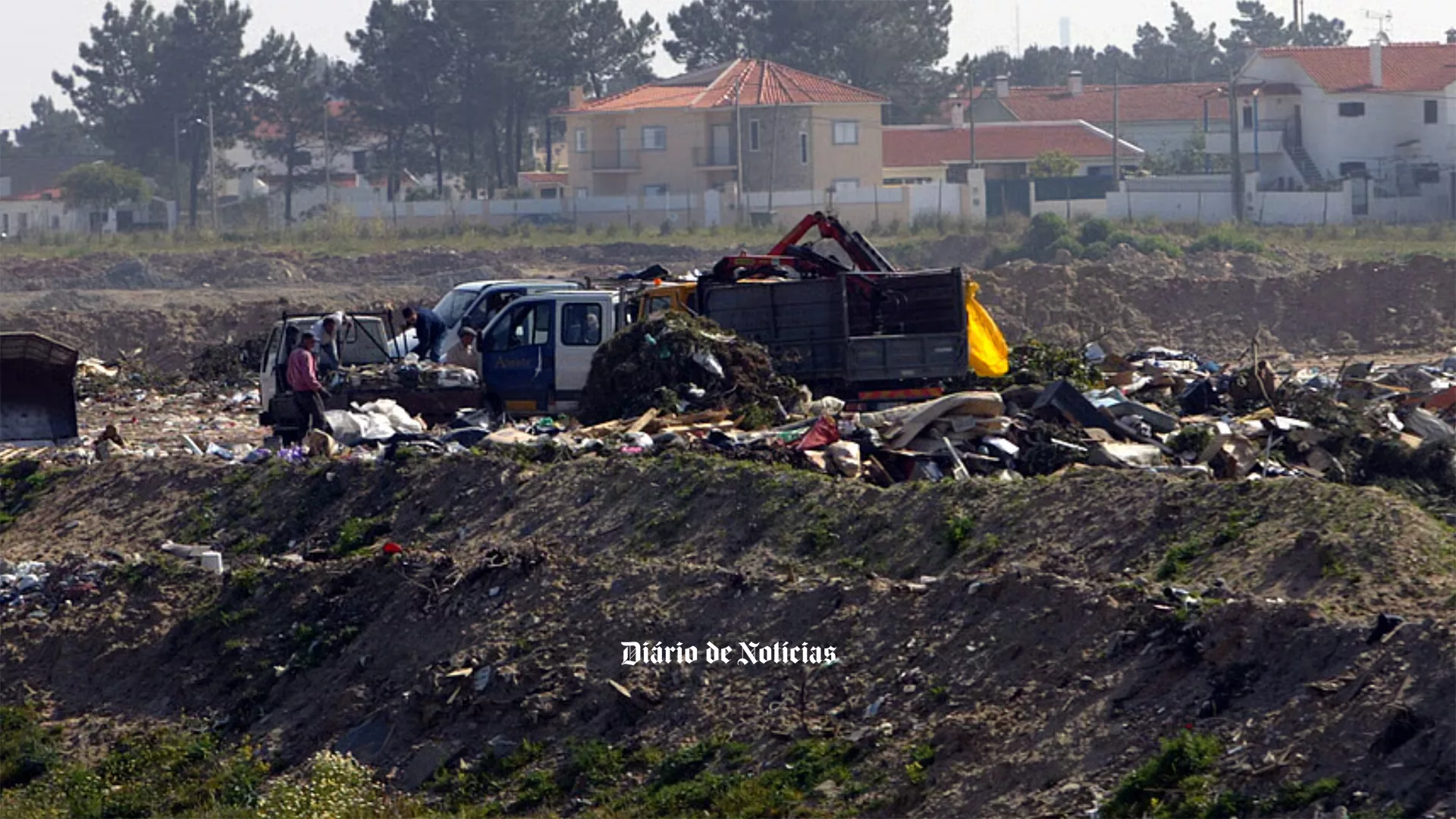
There is also an immediate and critical problem: landfill capacity. With approximately 3 million tonnes of waste deposited per year — and 52% of waste still going to landfill, when the European Union requires this figure to drop to 10% by 2035 — Portugal is rapidly approaching the limits of its landfill capacity. For the APA’s leader, the conclusion is clear: “We are burying resources that should be generating value.”
According to him, “installed capacity is running out, and we have only 6 to 7 years to significantly improve waste separation rates and reduce landfill disposal.” Building new landfills faces strong local opposition, and solutions such as incineration, beyond lacking EU funding, require many years of planning and construction — “a timeframe that cannot keep pace with the speed at which landfill capacity is being exhausted.”
Throughout his interview with DN, José Pimenta Machado did not shy away from strong words: “I would go as far as to say we are in a state of emergency.” According to him, “installed capacity is running out, and we have only 6 to 7 years to significantly improve waste separation rates and reduce landfill disposal.” Building new landfills faces strong local opposition, and solutions such as incineration, beyond lacking EU funding, require many years of planning and construction — “a timeframe that cannot keep pace with the speed at which landfill capacity is being exhausted.” Hence the key message: “every tonne that goes to landfill is a missed opportunity.”
When asked who bears responsibility for reversing this situation, José Pimenta Machado explains that the APA, as the National Waste Authority, has the mission of “proposing and coordinating the national strategy, overseeing and implementing public policies,” which are then approved by the Government. In the specific case of municipal waste, that strategy is set out in PERSU 2030, drawn up by the APA, which defines concrete targets for the 23 Municipal Waste Management Systems (SGRU) on the mainland. Each system is then required to operationalise those targets through PAPERSU plans, which must be approved by the APA and in which each entity formally commits to how it will contribute to the national objectives.
On the ground, responsibilities are distributed throughout the entire chain. The collection of municipal waste — both residual and selective — is primarily the responsibility of local councils. In 2023, there were 236 low-tier management entities responsible for residual waste collection.
The selective collection of packaging via recycling points (ecopontos) is handled in many cases by the SGRUs and, in others, directly by local councils. Waste treatment falls to the 23 SGRUs, which manage the high-tier service and frequently also support selective collection. In specific waste streams covered by Extended Producer Responsibility — such as waste electrical and electronic equipment or batteries — licensed dedicated networks operate, often in coordination with local councils. But, as the APA’s Chairman underlines, “citizens play an essential role: separating waste correctly and using the available collection points.”
Far from the European targets
Despite the efforts made, Portugal is still far from meeting its European objectives. José Pimenta Machado is categorical: “Not yet. And we need to be clear about that.” With a recycling rate of 37%, the country faces a challenge that demands genuine structural acceleration, not just “small or one-off measures.”
The consequences of non-compliance are serious and are already being felt in the short and medium term. Above all, there is the risk of EU legal proceedings and fines against the Portuguese State.
To reverse this trajectory, the APA’s Chairman identifies three fundamental lines of action. The first involves a significant increase in selective collection. Currently, selective collection accounts for around 20% and has been virtually stagnant for several years, while residual collection remains at 80%. For José Pimenta Machado, “as long as residual collection stays at this level, recycling will never grow at the pace needed,” stressing that source separation is essential to guarantee quality and avoid contamination that destroys value.
The second priority is strengthening the selective collection of bio-waste, which represents around 38% of household waste. This is a fraction with enormous potential to produce fertilising material and renewable energy, yet it remains largely untapped. In 2024, only 12% of bio-waste was selectively collected, and just 1.4% was diverted through domestic or community composting. In other words, the vast majority continues to end up in the residual waste bin.
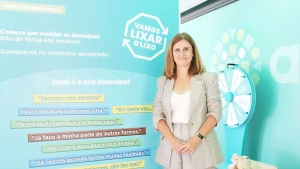
It is in this context that the APA’s new national campaign was launched. José Pimenta Machado describes it as “an unprecedented campaign, with an investment of €5.3 million,” designed to make waste separation “a natural, daily and conscious gesture.” The third line of action is mobilising the population through consistent campaigns. For the APA’s Chairman, “campaigns are essential, but they need to be consistent, repeated and clear,” particularly regarding bio-waste, where it is still necessary to explain clearly that food scraps also need to be separated.
Despite the challenging picture, there are positive signs. Since the start of 2024, around 200 municipalities have moved forward with the selective collection of bio-waste, diverting approximately 250,000 tonnes from residual collection. A further 150 municipalities have invested in domestic and community composting, diverting an additional 29,000 tonnes. There are also good examples across the country, such as Cascais, Maia, Guimarães, Alter do Chão and Póvoa de Varzim, which are already managing to collect between 30% and 45% of their bio-waste. Nevertheless, 86.5% of bio-waste — around 1.7 million tonnes — still ends up in residual waste, and there are municipalities that have yet to implement any solution.
Investment and incentives are other key pieces of the puzzle. According to José Pimenta Machado, there are now several support instruments available, such as the TERRA Plan, the PRR, Portugal 2030 and the Environmental Fund, which are financing the selective collection of bio-waste and circular economy solutions. In addition, the Waste Management Fee (TGR) is beginning to reward better performance: “in 2024, the best-performing municipalities saved around €4 million.” The message is clear and direct: “those who separate, gain. Those who invest, save. Those who recycle, lead.”
It is in this context that the APA’s new national campaign was launched. José Pimenta Machado describes it as “an unprecedented campaign, with an investment of €5.3 million,” designed to make waste separation “a natural, daily and conscious gesture.” The campaign kicked off at Christmas 2025 and runs throughout 2026, with two main moments: “In the season of togetherness, make the separation” and now, “Let’s separate the waste before our future is wasted.” The aim is to reach the whole country — “from the coast to the interior, speaking to all ages” — and put the issue of municipal solid waste at the centre of the public agenda.
But the APA’s Chairman issues a final warning: “Without trust, no campaign will succeed.” And that trust only exists when citizens find equipment available, clear information and visible results. To achieve this, he concludes, “management entities and local councils must be prepared to meet citizens’ demands.”