Reduce and recycle. Portugal generates a mountain of 1800000 kilograms of waste in the summer
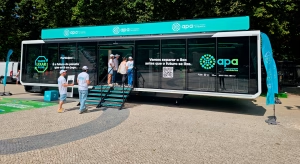
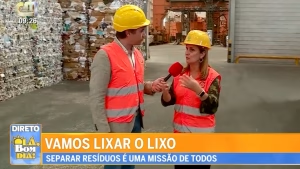
As August begins—the month when the highest volume of urban waste is generated in Portugal—the Portuguese Environmental Agency (APA) highlights the need to produce less waste and to sort it correctly. After all, the best waste is the waste that is never produced. A new phase of the “Let’s separate the waste” campaign draws attention to the time of year when urban waste generation spikes.
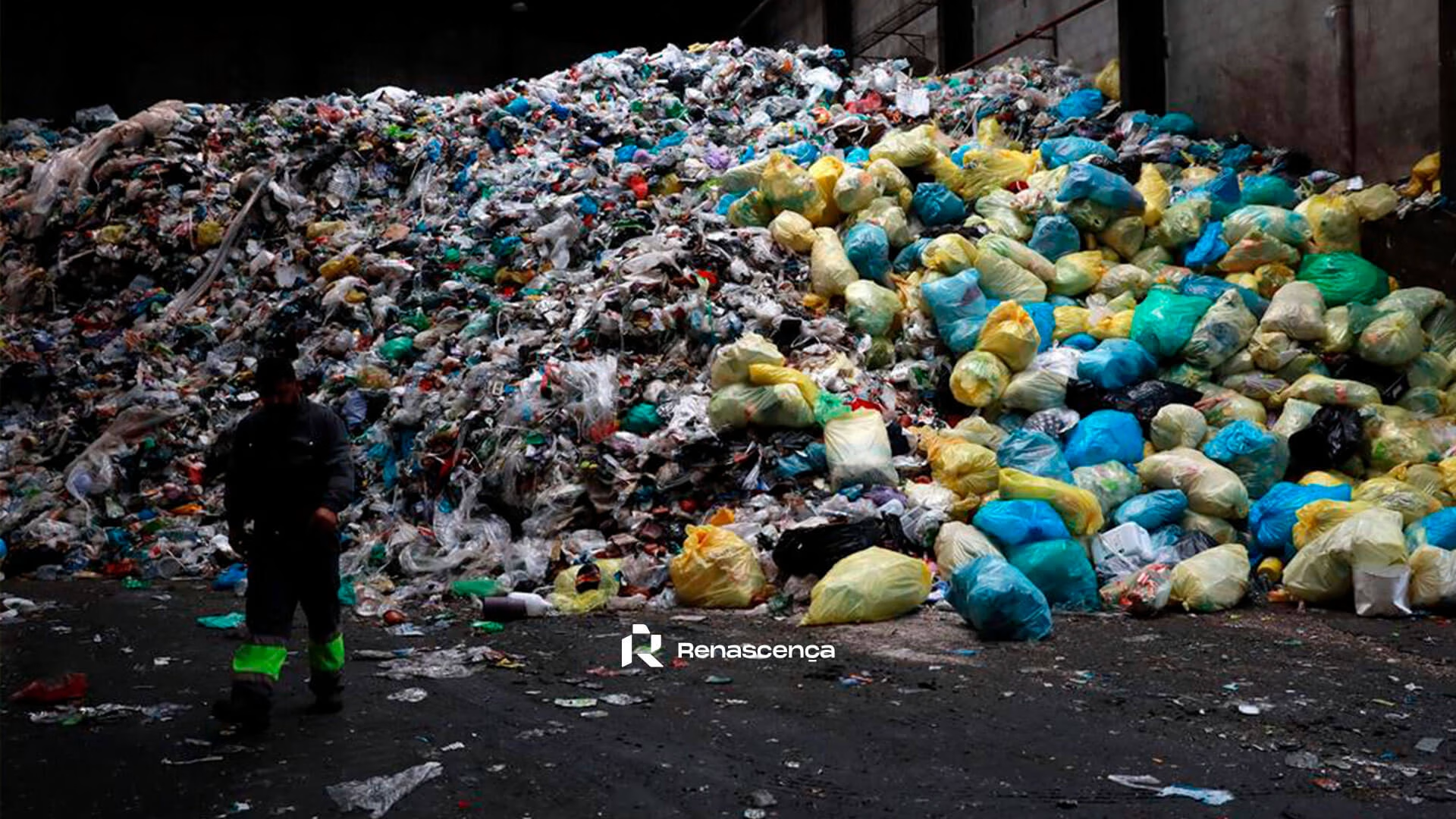
“Between June and September, we produce about 1.8 million tonnes of urban waste [1,800,000 kilograms]—an impressive figure—with August being the month when we generate the most waste, around 480,000 tonnes,” explains José Pimenta Machado. That amounts to 480 million kilograms of trash.
The president of the Portuguese Environmental Agency therefore calls for waste prevention and proper sorting. “Prevention. That must be the top priority. Producing less waste. Whenever we go to the supermarket, we should avoid food waste, make more sustainable purchases, and reuse packaging—which is crucial,” he asserts. “Next, we must sort our waste, remembering that an item placed in the right bin turns into a resource.
This is essential for paper, glass, and plastics, and now for bio-waste—food scraps, which already account for about 38% to 40% of the urban waste we produce,” the APA president adds. “Anything we can do regarding biowaste is fundamental to improving our performance in separate waste collection,” emphasizes José Pimenta Machado.
As for the areas of the country that generate the most trash in August, “they are the areas with the most tourism, where we have the most visitors.” “That is good for the Portuguese economy, but it means more people generating waste,” he notes. “And so, it is in the areas with the most tourism—naturally the Algarve, but the entire coastal strip where we receive the most visitors—that we see higher levels of tourism and greater waste generation.”
José Pimenta Machado also notes that the country produces 5.5 million tons of waste annually, and that by 2025, “we will see a 1.3% increase in the waste burden”—meaning we will reach 5.6 million tons of municipal waste.
“We have to reverse this trend; therefore, a campaign is being launched this year with a fundamental appeal focused—I must insist—on prevention, followed by waste separation,” explains the president of the APA.