Braga hosts the “Let’s separate the waste” roadshow to accelerate biowaste recycling
The project aims to engage the community in adopting more sustainable habits, reinforcing the importance of the separate collection of biowaste and reducing the amount of organic waste sent to landfills.
On July 3, 4, and 5, Braga will host the “Let’s separate the waste” national roadshow at Praça da República. This is a nationwide initiative promoted by the Portuguese Environmental Agency (APA), supported by the Environmental Fund and co-financed by European funds; it is dedicated to raising public awareness and mobilizing the population regarding the proper separation and recovery of biowaste.
The project aims to engage the community in adopting more sustainable habits, reinforcing the importance of the separate collection of biowaste and reducing the amount of organic waste sent to landfills.
The official presentation of the roadshow in Braga was attended by João Rodrigues, the Mayor, who underscored the initiative’s crucial impact on the municipality’s future. “This project is vital for waste management in a city that is continuously growing and needs to adjust its environmental responses to that dynamic,” he noted on the occasion.
João Rodrigues also highlighted the strategic focus on “educating the youth,” emphasizing that “it is fundamental to teach the importance of waste separation from an early age, ensuring that new generations grow up knowing that biowaste is very important” and that its proper treatment makes all the difference.
Meanwhile, the Secretary of State for the Environment, João Manuel Esteves, acknowledged the project’s scale and ambition, stating that this commitment is “important for everyone.” The official took the opportunity to stress the national vision for the sector: “We want a clean Portugal”—a goal that, according to him, depends directly on the success of grassroots initiatives like this one.
Also present at the session, the President of the Portuguese Environmental Agency (APA), José Pimenta Machado, highlighted seasonal sustainability challenges, noting that “with the arrival of summer, we generate more waste,” which makes reinforcing these awareness-raising campaigns among residents and visitors “even more urgent.”
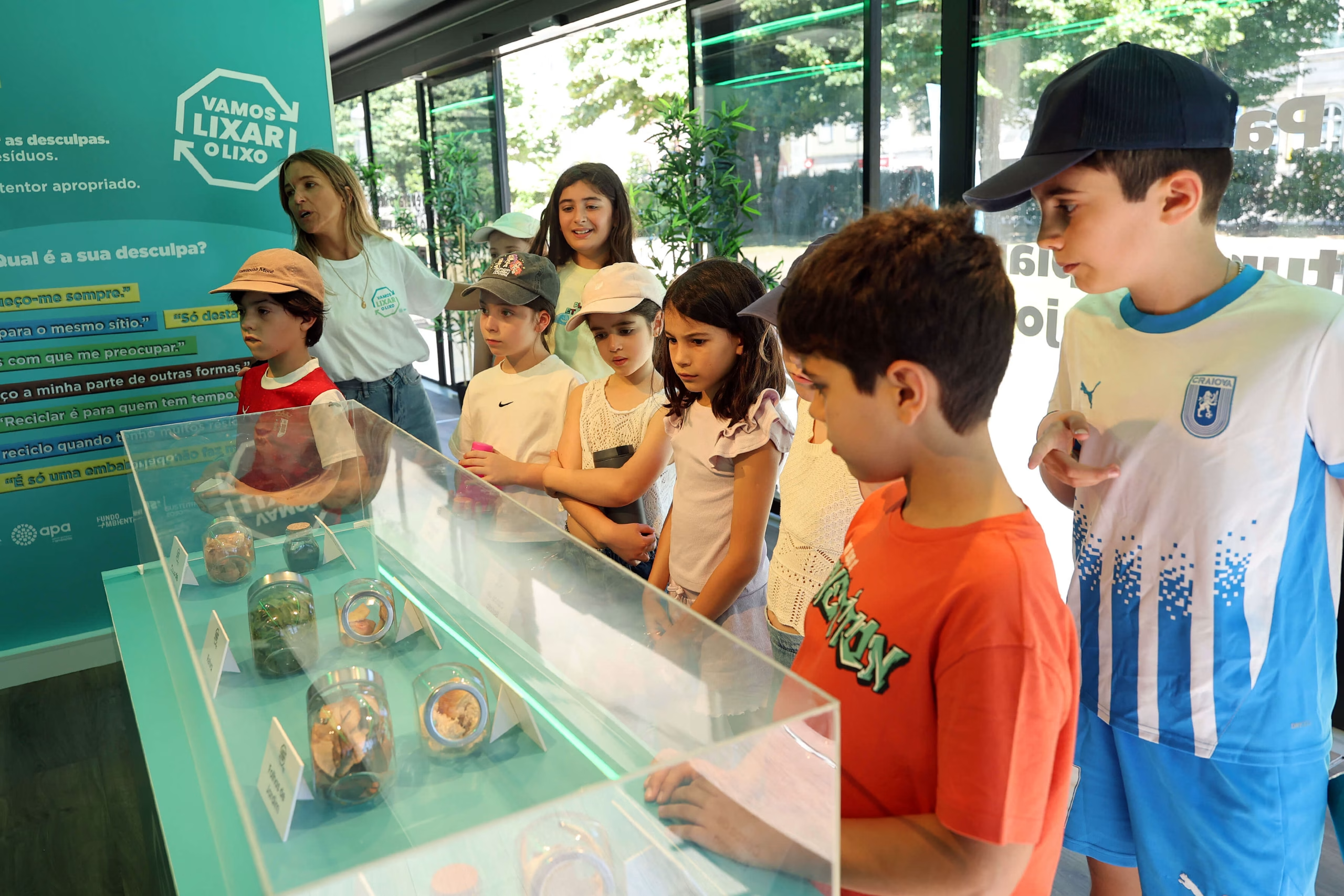
Around 150 children from local schools and social welfare institutions also joined the initiative. This strong participation by young people gave special significance to the project’s launch, underscoring the importance of environmental education from an early age and the involvement of new generations in adopting more sustainable behaviors. Through fun and educational activities, the children learned about best practices for sorting and recovering organic waste, becoming active agents in promoting a culture of environmental responsibility.