Braga hosts “Let’s separate the waste” roadshow to promote biowaste recycling
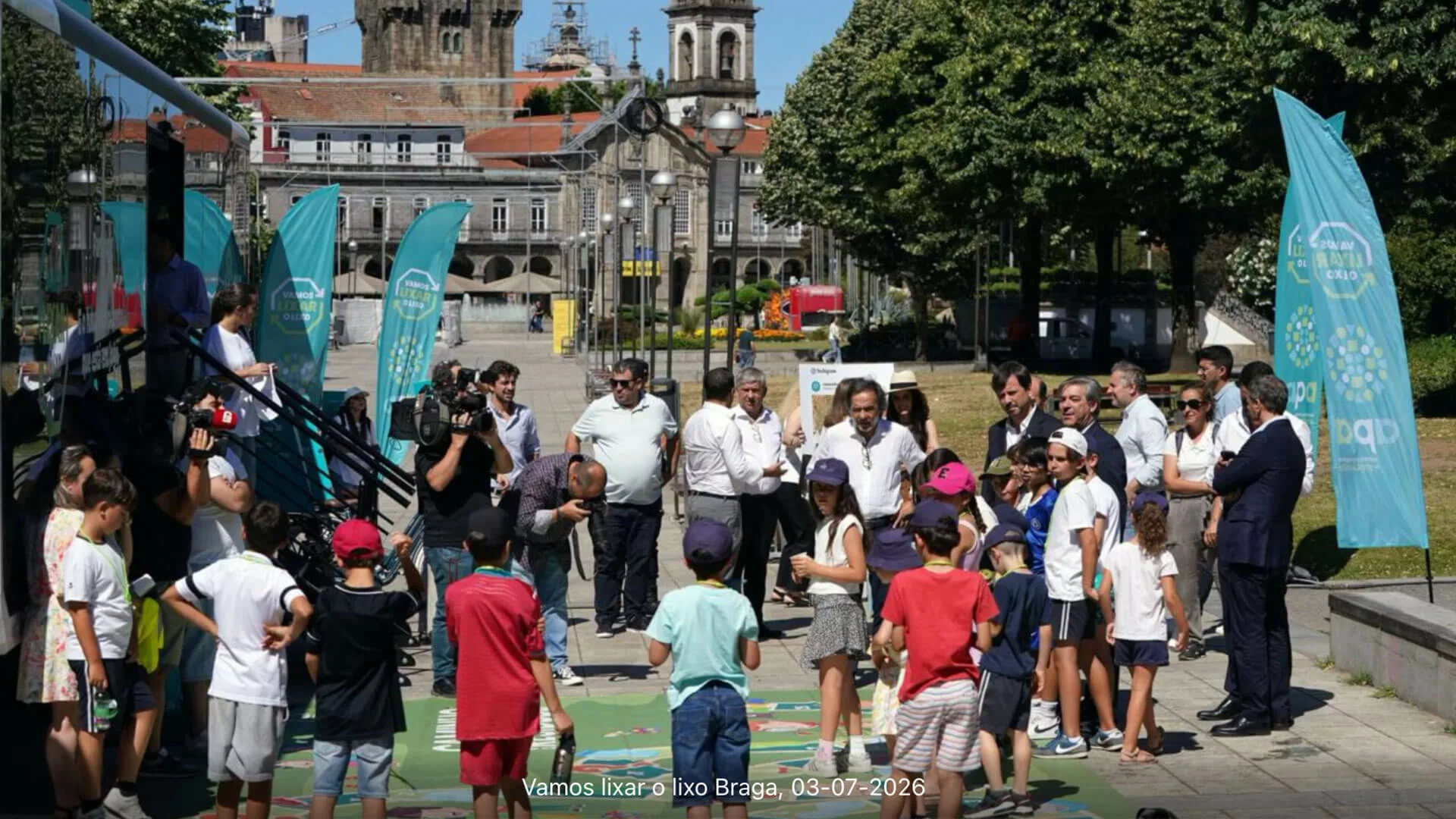
Praça da República in Braga is hosting the national roadshow “Let’s separate the waste” from today through Sunday (July 3–5). This initiative is promoted by the Portuguese Environmental Agency (APA), supported by the Environmental Fund, and co-financed by European funds; it aims to raise public awareness regarding the proper separation and recovery of biowaste.
The campaign seeks to encourage the adoption of more sustainable habits by promoting the separate collection of organic waste and helping to reduce the amount of such material sent to landfills.
The initiative’s official presentation was attended by Braga’s Mayor, João Rodrigues, who highlighted the project’s importance in addressing the environmental challenges faced by a growing municipality.
“This project is crucial for waste management in a city that is constantly growing and needs to adapt its environmental responses to that dynamic,” the mayor stated.
João Rodrigues also emphasized the importance of environmental education for younger generations, noting that fostering awareness about waste separation from an early age is essential.
“It is vital to educate people early on about the importance of waste separation, ensuring that new generations grow up knowing that bio-waste is significant and that its proper treatment makes a real difference,” he remarked.
Also present at the event was the Secretary of State for the Environment, João Manuel Esteves, who described the initiative as a collective commitment to sustainability. “We want a clean Portugal,” the official stated, arguing that achieving this goal depends on active citizen participation and the success of local outreach campaigns like the one taking place in Braga.
Meanwhile, the president of the Portuguese Environmental Agency, José Pimenta Machado, warned of the increase in waste generation during the summer, stressing the need to step up awareness-raising efforts at this time of year.
The launch of the roadshow also involved around 150 children from local schools and private social solidarity institutions (IPSS), who took part in educational and recreational activities focused on the separation and recovery of biowaste.
Through this initiative, the organizers aim to reinforce the role of environmental education from an early age and encourage more responsible behaviors, thereby fostering greater community participation in sustainable waste management and environmental protection.